
- This is how to grow maize step by step in Kenya easily but professionally for a bumper harvest.
- Start by selecting a variety that suits your purpose and climate, prepare your land early, plant at the right spacing, apply fertilisers at the right time, and control weeds and Fall Armyworm.
- This how to grow maize step by step guide should help you increase your maize yield per acre.
How to Grow Maize Step by Step
Step 1: Variety Selection
Select a variety that will suit your climatic conditions and purpose.
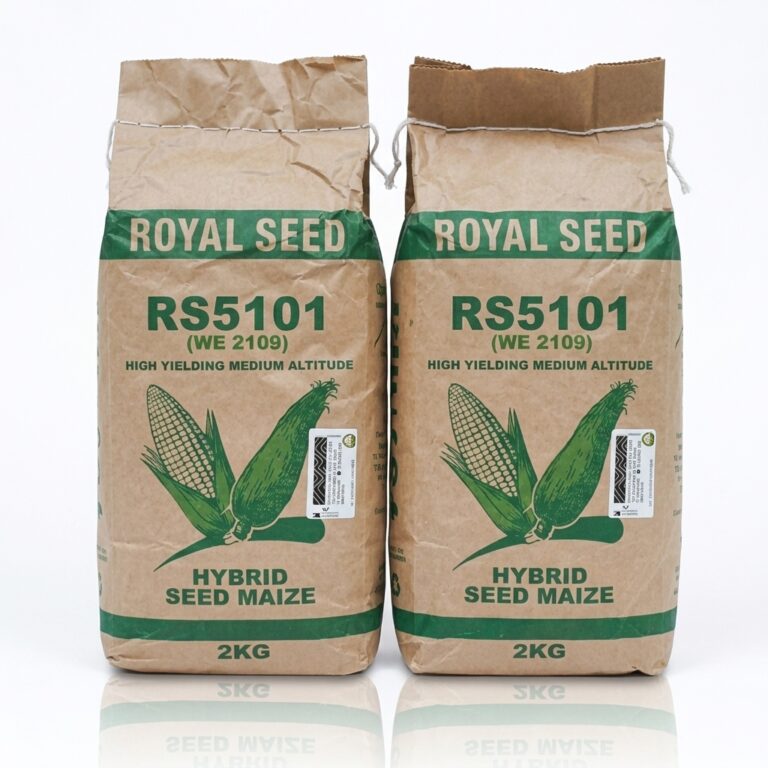
For instance, if farming in drylands, go for drought-tolerant varieties such as Tsavo WE 4141 or Rs 5101.
ALSO READ: The best maize seeds for short rains in Kenya 2026
For silage, go for high-forage varieties such as H614D, H6213, or DK500. For roasting, go for Haraka WH101, H614D, or KH 500.
Step 2: Land Preparation
Plough the land well and deeply for good drainage and aeration. If there is a way you can prevent flooding, just try to do it.
Ploughing should be done early for weeds to dry. To enhance fertility, you can broadcast some manure.
You can also use non-selective herbicides such as Kausha and Roundup if you don’t want to till the land.
Step 3: Maize Planting
For manual planting, plant at a spacing of 60cm by 25cm, 2-3 seeds per hole, for high yield.
For silage, narrow the spacing to 50cm by 25cm with 3 seeds per hole for high tonnage per acre. 10- 12 kg seed rate per acre.
Before planting, add enough manure per hole (2kg tin or 10 tons per acre at least). This will help boost yield through nutrients and water retention.
Do not intercrop with beans, for easy and cheap weed control using selective herbicides.
Step 4: Fertilizer Application
Top dress with DAP 18.46.0 fertilizer 10-14 days after sowing.
At this point, the plant will have developed true roots that can absorb nutrients.
If you can, top dress with NPK 23.23.0 35 days after sowing to enhance faster growth, but if you used sufficient manure, you can skip it.
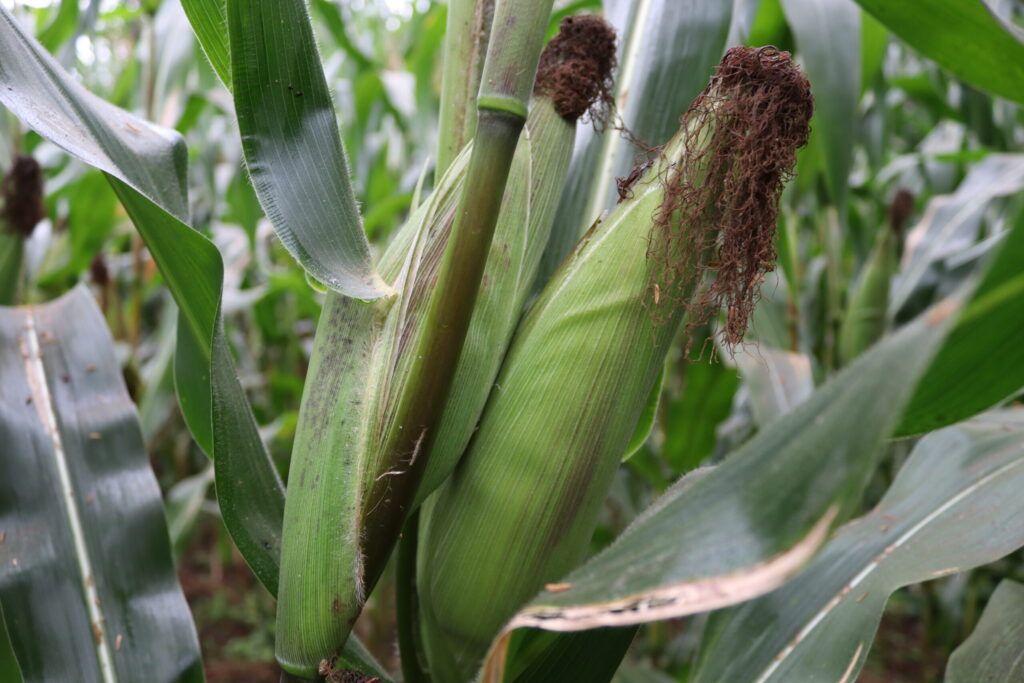
Top dress with CAN fertilizer 60 days after sowing or when maize starts producing tassels.
The calcium will help with seed formation and development.
For every application, use at least 100 kg per acre.
The fertilizers should not come into contact with the leaves or the stem, as it can scorch the plant.
The success of this how to grow maize step by step in Kenya guide depends on how well you feed your crops through fertilization.
Step 5: Weed Management
Use selective herbicides to control weeds early.
Herbicides that can be applied pre- and post-emergent, such as Governor, are very effective.
Hand weeding is also effective, though costly.
Step 6: Fall Armyworm Control
Apply Amigad or Emmaron early, from the 4th week after sowing and repeat 14 days thereafter for total eradication of fall armyworm and even maize stalk borer.
The application can be mixed with foliar fertilisers such as Hyrich (NPK 24.24.20).
Despite it being possible to harvest above 25 bags per acre from maize varieties, other factors out of your control, such as weather changes and harsh climatic conditions such as drought and flooding, can hinder this.
How well you feed your maize, especially fertilisation and fall armyworm control, can influence the yield per acre.
Input quality and how you apply it can also affect yield, positively or negatively. The yield is not guaranteed.
And that is how to grow maize step by step.
How do you plant your maize, and how was the yied in the previous harvest?