
 Kelvin Wairimu
Starting a successful pixie orange farm in Kenya requires more than just planting trees and hoping for the best—it demands a solid foundation built on understanding the crop’s requirements, proper soil preparation, and selecting quality planting material.
This comprehensive guide takes you through the critical first steps of pixie orange farming, from understanding climate and soil requirements to choosing the right seedlings that will determine your farm’s productivity for years to come.
Whether you’re planning a small quarter-acre plot or a commercial venture spanning multiple acres, mastering these fundamentals will set you on the path to achieving profitable yields of KSh 80-150 per kg.
The Pixie Orange Opportunity in Kenya
Despite great demand and the ability to thrive in dry areas with little rainfall, the majority of pixie farmers in Kenya have yet to make any profit.
Imagine committing over KSh 300,000 in capital to set up one acre of pixies with hopes of continuous harvest from the 2nd-3rd year, only never to see it materialise. And those who manage to harvest often get yields way below expectations.
This is about to change with this must-read, detailed manual for pixie farming in Kenya, from soil preparation to profitable harvest. Earning KSh 80-150 per kg is only achievable if everything is done right.
Makueni, Kitui, and Machakos lead as the largest producers of pixies in Kenya due to ideal semi-arid conditions. The crop is rapidly expanding to other regions such as the coast, central Kenya, the Rift Valley, and the Nyanza region as farmers recognise its profitability.
Origin and Characteristics
Pixie oranges (also known as Pixie tangerines or Pixie mandarins) originated from the University of California, Riverside Citrus Research Centre through hybridization of King and Dancy mandarins, with research beginning in 1927.
Fruit Characteristics:
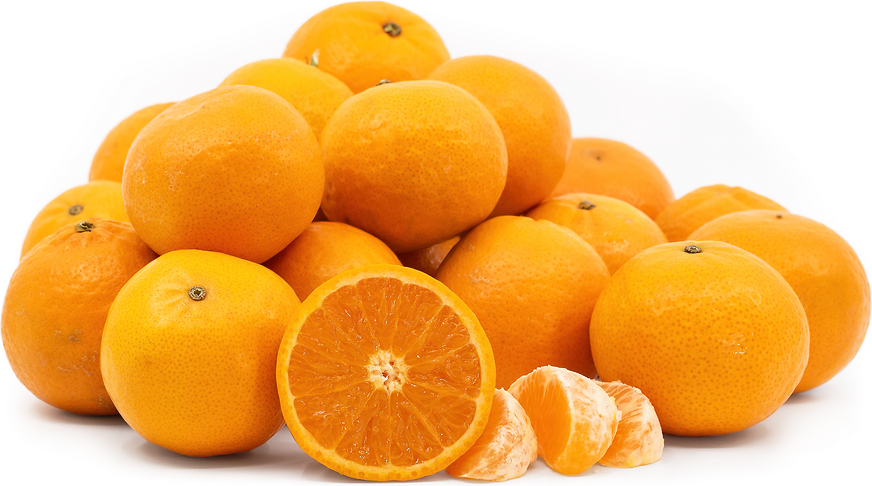
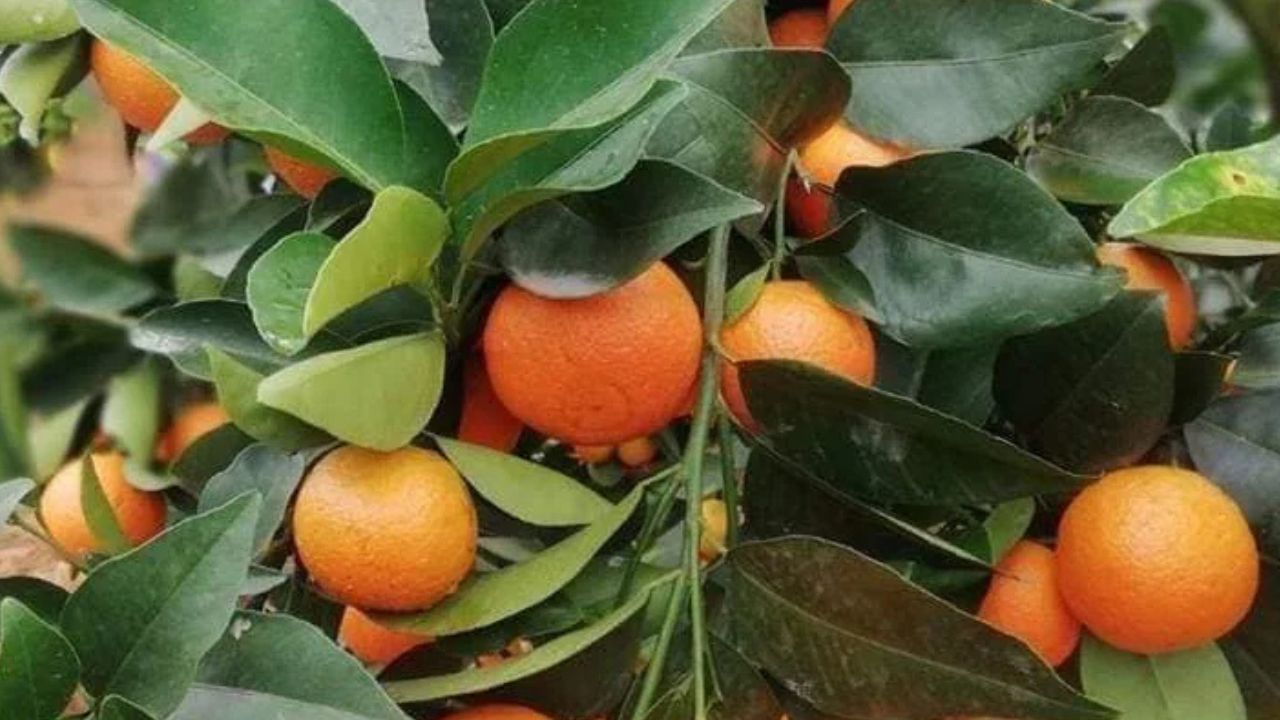
- Small, uniform-sized fruits about 5-7 cm in diameter
- Bright yellow-orange hue that intensifies as the fruit ripens
- Seedless with thin, bumpy skin that’s easy to peel by hand
Tree Characteristics:
- Height: 2-4 meters at maturity
- Canopy radius: 3 meters
- Root depth: 60-90 cm
Climate and Ecological Requirements
Temperature
Pixies perform best at 23-28°C with a tolerance range of 10-35°C.
- Below 10°C: Growth slows significantly with risk of frost damage
- Above 35°C: Heat stress, reduced flowering, and fruit drop
Rainfall
Pixies require annual rainfall of 900-1,500 mm distributed as follows:
- Flowering period (Feb-April): Moderate 100-120 mm/month
- Fruit development (May-Aug): Consistent moisture 120-150 mm/month
- Maturation period: Reduced moisture (80-100 mm/month) for sugar concentration
Important: Having a backup irrigation system is a necessity.
Other Climate Factors
- Sunlight: 6-8 hours daily
- Wind: Moderate winds of 10-20 km/hr are ideal. Strong winds cause fruit scarring, branch breakage, and dehydration.
- Relative Humidity: 60-80%. High humidity increases fungal diseases.
Ideal Soil Characteristics for Pixies
Pixie trees thrive on:
- Well-drained sandy loam or loamy soils
- Minimum 60 cm deep for proper root development
- Soil pH of 5.5-7.0 (optimal: 6.0-6.5)
- Well-drained with high organic matter content
Soil Testing: A Critical First Step
Before planting, carry out a soil test to determine:
- pH levels
- NPK levels
- Micronutrients
- Organic matter content
- Salinity
- Texture
Where to Test:
- KALRO (Kenya Agricultural and Livestock Research Organisation) laboratories
- University laboratories (Nairobi University, Egerton University, Jomo Kenyatta University)
- Private labs: Crop Nutrition Laboratory Services, Biolabs Kenya
Cost: KSh 2,000-10,000 per comprehensive soil test
Land Preparation
Step 1: Clearing (Cost: KSh 6,000-12,000)
Begin by clearing all weeds, stumps, rocks, debris, and any existing vegetation completely. This cost depends on whether you use manual clearing or tractors.
Step 2: Levelling
Level the land if necessary, maintaining a gentle slope of 2-5% for drainage.
Step 3: Deep Ploughing
Carry out deep ploughing to:
- Break hardpans
- Improve aeration
- Enhance drainage
This should be done during the dry season for easier working. It’s advisable to amend the soil at this point based on test results.
Step 4: Hole Preparation (2-4 weeks before planting)
Hole Dimensions: 60 cm × 60 cm × 60 cm (2 ft × 2 ft × 2 ft)
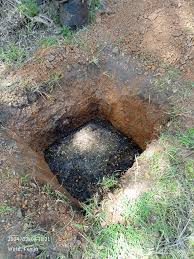
Procedure:
- Mark planting positions according to the chosen spacing
- Dig holes to the required dimensions
- Keep topsoil (0-30 cm) separate from subsoil (30-60 cm)
- Mix the topsoil with 2 buckets of well-decomposed manure
- Fill the hole 3/4 full
- Leave the top 1/4 for planting
- Apply 20 litres of water per hole
Cost: KSh 150-200 per hole
Selecting Quality Seedlings
Types of Seedlings
1. Grafted Seedlings (HIGHLY RECOMMENDED)
Advantages:
- Early fruiting: 2-3 years vs. 5-7 years for non-grafted seedlings
- Disease resistance: Rootstock provides resistance to root rot, nematodes, and greening
- Uniform quality: Consistent fruit size and flavour
- Higher yields: 30-50% more productive
- Better adaptation: Rootstock adapted to local soil conditions
Recommended Rootstocks for Kenya:
1. Trifoliate Orange (Poncirus trifoliata)
- Advantages: Excellent resistance to Phytophthora, citrus greening, and nematodes
- Disadvantages: Sensitive to high temperatures (not ideal below 800 masl)
- Best for: Highland areas (1,200-2,000 masl)
2. Carrizo Citrange
- Advantages: Good disease resistance, drought tolerance, produces high-quality fruit
- Disadvantages: Sensitive to salinity
- Best for: Central Kenya, Western Kenya (medium altitudes)
3. Rough Lemon (Citrus jambhiri)
- Advantages: Excellent drought tolerance, adapts to poor soils, vigorous growth
- Disadvantages: Susceptible to Tristeza virus and Phytophthora
- Best for: Arid/semi-arid areas (Makueni, Machakos, Kitui, coastal regions)
4. Sour Orange (Citrus aurantium)
- Advantages: Good overall performance, drought tolerance, disease resistance
- Disadvantages: Susceptible to Tristeza virus in some regions
- Best for: Coastal and Eastern Kenya
Grafted Seedling Characteristics:
- Graft union visible: 10-15 cm above the soil line
- Height: 30-50 cm from the soil line
- Stem diameter: Pencil thickness or larger
- Age: 10-18 months old from grafting
2. Non-Grafted Seedlings (NOT RECOMMENDED)
Why to Avoid:
- Take 5-7 years to fruit
- More susceptible to diseases (greening, root rot)
- Variable fruit quality
- Lower yields
- Poor adaptability to challenging soils
Quality Indicators for Seedlings
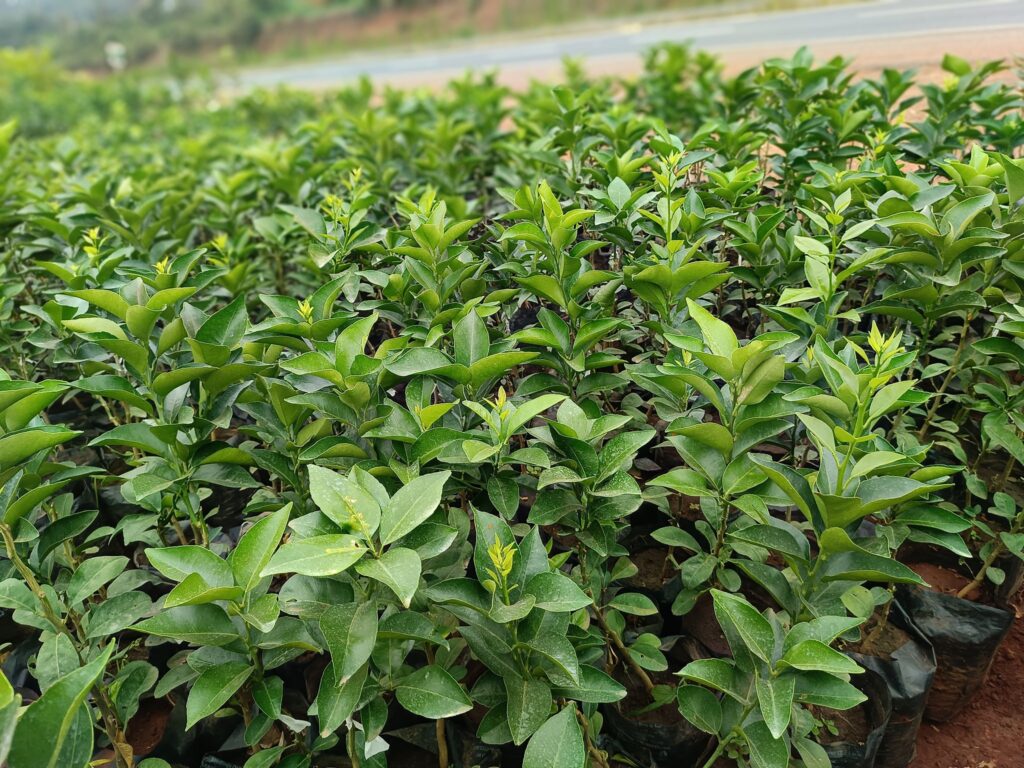
Visual Inspection Checklist:
✓ Accept seedlings with:
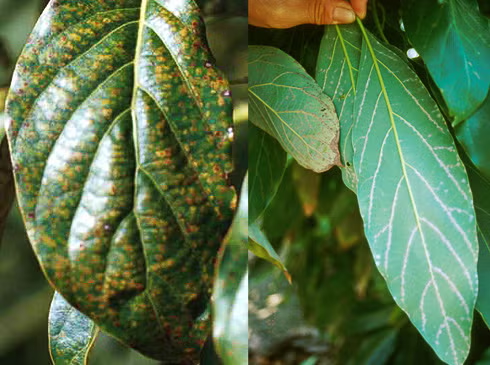
- Healthy foliage: Dark green leaves, no yellowing or spots
- Strong stem: Firm, straight, no lesions or cankers
- Clean graft union: Well-healed, no swelling or oozing
- Active growth: New flush of leaves, vigorous appearance
- Root system: Well-developed, white roots (if visible in bag)
- Pest-free: No aphids, scales, leaf miners, or other insects
- Disease-free: No gumming, leaf spots, or wilting
✗ Reject seedlings with:
- Yellowing leaves (nutrient deficiency or disease)
- Stunted growth
- Visible pests
- Gum oozing from the stem or graft union
- Broken or damaged stems
- Dry or rotted roots
- Leaf spots or lesions
Questions to Ask Suppliers:
- Is the seedling grafted? What rootstock?
- What is the age of the seedling from grafting?
- Is it KEPHIS-certified disease-free?
- What is the return/replacement policy for dead seedlings?
- Do you provide technical support after purchase?
Seedling Requirements and Costs
| Farm Size | Spacing | Trees/Acre | Seedlings Cost Range @ KSh 200 |
| Small (¼ acre) | 3m × 4m | 50-65 | 10,000-13,000 |
| Small (½ acre) | 3m × 4m | 100-130 | 20,000-26,000 |
| Medium (1 acre) | 3m × 4m | 200-250 | 40,000-50,000 |
| Medium (2 acres) | 3m × 5m | 350-440 | 70,000-88,000 |
| Large (5 acres) | 3m × 5m | 900-1,100 | 180,000-220,000 |
| Commercial (10+ acres) | 3m × 5m | 1,800-2,200/10 acres | 360,000-440,000 |
Upon arrival of seedlings: Water thoroughly and place them under shade.
Recommended Spacing for Pixie Oranges
Spacing depends on:
- Soil fertility (poorer soils = wider spacing)
- Water availability (limited water = wider spacing)
- Mechanisation needs (machinery access requires wider spacing)
- Management intensity (intensive = closer spacing possible)
| Spacing | Trees/Acre | Best For | Spacing Type |
| 3m × 3m | 450 | Very intensive, excellent soil/water | Ultra-high density |
| 3m × 4m | 340 | High input, good management | High density |
| 3m × 5m | 270 | MOST COMMON – balanced approach | Standard density |
| 4m × 4m | 250 | Good soil, moderate inputs | Medium density |
| 4m × 5m | 200 | Limited water, less fertile soil | Medium-low density |
| 5m × 5m | 170 | Poor soil, minimal irrigation | Low density |
MOST RECOMMENDED SPACING FOR KENYAN FARMERS: 3m × 5m spacing (270 trees/acre)
Rationale:
- Plant-to-plant: 3 meters
- Row-to-row: 5 meters
- Allows sufficient canopy development
- Easy access for spraying/harvesting
- Potential for intercropping
Row Orientation: East-West direction for maximum sunlight penetration
Coming Next: Part 2 will cover planting procedures, irrigation and water management, fertilisation programs, and pruning techniques to ensure your pixie orchard thrives and produces profitable harvests.
About Post Author



)