

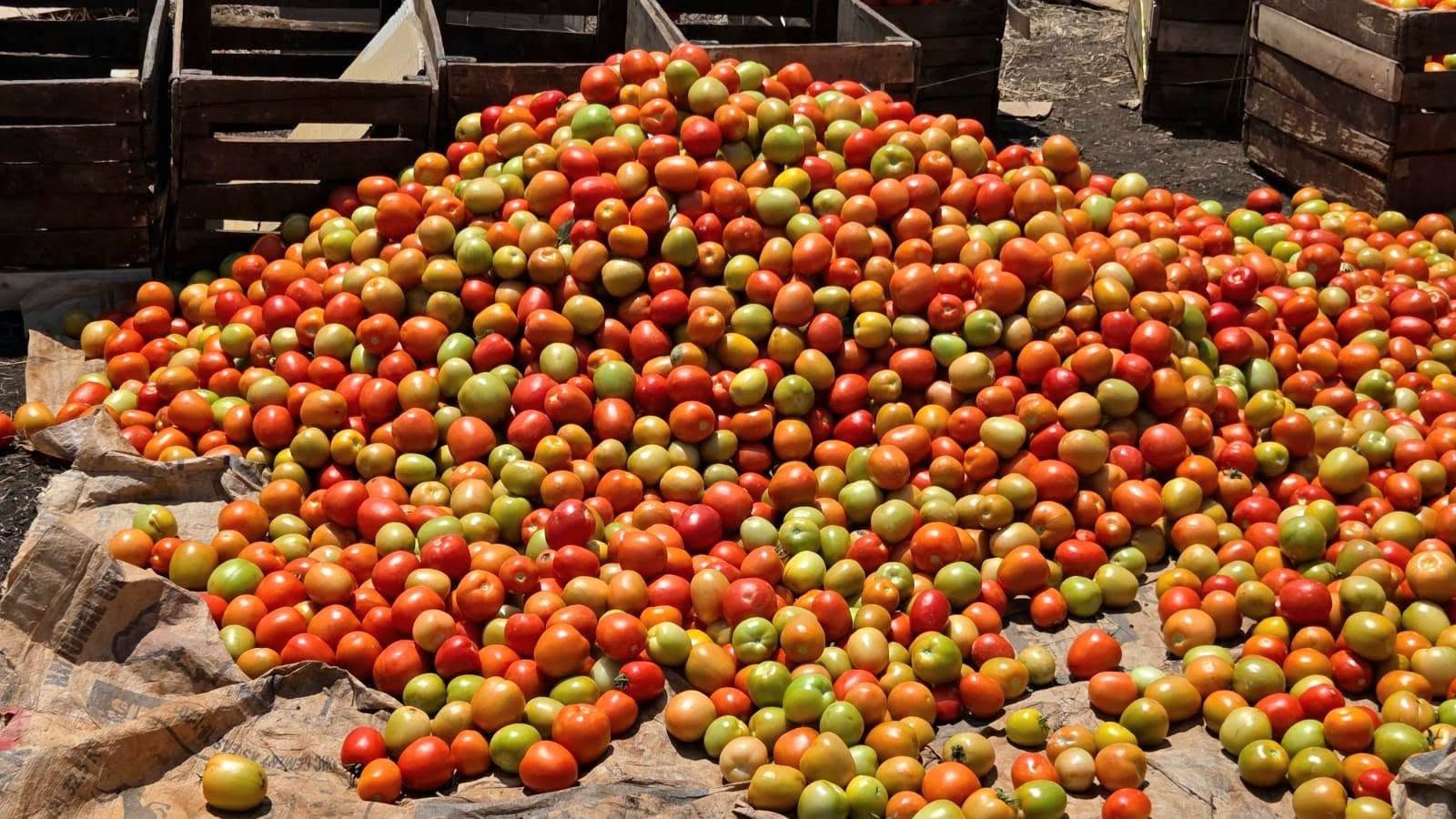
How do you start profitable tomato farming? Before doing anything else on a tomato farm, first study the market to establish when supply is highest. This is often when prices are low, and farmers complain and end up making losses.
This is often the best time to plant your tomatoes. Yes, when farmers are making losses and prices are lowest.
Planting at this time gives you an edge over most farmers, simply because you will be harvesting 3 months later, and at that time prices are often high due to the scarce supply.
This is what should lead your production decisions: prevailing market prices.
Your farm must also have well-drained and fertile loam or sandy loam soil.
When deciding to venture into tomato farming, there is something important to consider when it comes to land selection: the history of the farm and what crops were planted previously. This is key because of bacterial wilt disease, which has a tendency to destroy crops almost in totality.
Tomatoes, capsicums, potatoes, and black nightshade (managu) are the most affected crops. Always consider varieties with high tolerance to black rot.
Have access to permanent irrigation water. Drip irrigation is preferable but quite expensive, especially installation.
Flooding/furrow irrigation works too in tomato farming. When doing overhead irrigation, avoid late-evening irrigation to avoid spreading fungal diseases.
You cannot rely on rainfall alone, as it’s not reliable.
Finally, make sure you have enough capital for all inputs. Tomatoes are heavy feeders and require intensive supplementation for high yields and control of pests and diseases.
Best Tomato varieties to grow in Kenya
In tomato farming, there are two types of varieties: hybrid or open-pollinated.
Big Rock F1, Ansal F1, Harmony F1, Royal 703 F1, and Terminator F1 are the best tomato varieties to plant in Kenya in 2026.
Rio Grande and Cal J are alternative open-pollinated varieties you can consider for tomato farming if on a budget constraint.
Big Rock F1 is an excellent hybrid, tall, determinate tomato variety with an excellent after-harvest shelf life of 21 days.
It is loved for its high yield of 30 tons per acre under good management, with a maturity of 75-90 days from transplanting.
It has good resistance to Tomato Yellow Leaf Curl Virus (TYLCV). It is the most preferred variety in tomato farming.
Ansal F1 is a hybrid tomato variety with elongated, square-round tomato fruits. It is an early-maturing variety, 75-90 days, with a good yield of above 28 tons per acre under good management.
It does well even in warm areas. It has good resistance against TYLCV.
Terminator F1 is a semi-determinate hybrid with strong resistance to TYLCV & ToMV.
It has a good maturity of 70 days after transplanting and can yield above 30 tons per acre under good management. It is loved for its long after-harvest shelf life of 21 days.
Harmony F1 is a hybrid tomato variety with oval-shaped, firm fruits. It has a maturity of 70-75 days and a yield of over 30 tons under good management.
Royal 703 F1 is a hybrid tomato variety with oval-shaped fruits and a maturity of 75 days from transplanting.
It can produce 5-6 large, uniform fruits per cluster and has a harvest duration of 5-6 months.
It has good tolerance against Tomato Fusarium Wilt, Tomato Yellow Leaf Curl Virus (TYLCV), Tomato Spotted Wilt Virus (TSWV), Verticillium Wilt, Bacterial Speck, and Nematodes.
Best months to plant tomatoes in Kenya
The best months to plant/transplant tomatoes in Kenya and enjoy the best prices ever are when the market is flooded, and prices are at their lowest.
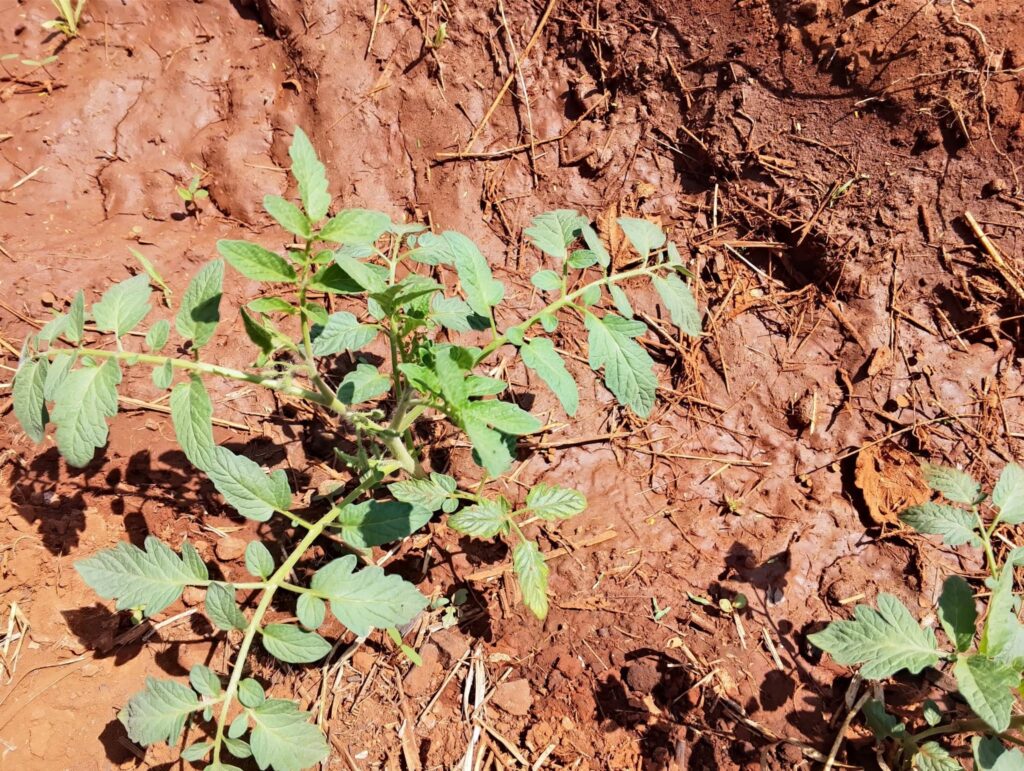
March, April, and May are the best months to plant/transplant tomatoes in Kenya.
Despite there being heavy rainfall during these months and a higher prevalence of fungal diseases, they still remain the most ideal time for tomato farming, simply because production at this time is lowest, pushing prices high three months later.
How to raise tomato seedlings-Tomato Farming
There are two options in tomato farming: buy raised seedlings or raise your own. Raising your own is cheaper compared to buying.
Normally, an acre needs about 10,000 tomato seeds when planted at a spacing of 60cm by 60cm. This costs between Ksh 31,000-40,000 for seeds, while seedlings go for Ksh 50,000-60,000.
Make a raised seed bed measuring 1m by a length of your choice. Sow your tomato seeds sparingly in a shallow drill, cover with loose soil, and water. You can cover with dry grass or paper to hasten germination.
Normally, tomato seeds take 4-6 days to germinate and 4-6 weeks to develop 5 true leaves ready for germination.
At the seedbed, spray Easygro Starter or Optimizer to hasten growth. Apply a little Ridomil Gold, 25g/20l water, to prevent blight and downy mildew after transplanting.
How to transplant tomatoes in Kenya
Make planting holes at a spacing of 60cm by 60cm. Add one 2kg tin of decomposed manure and water.
Transplant your seedlings and water again. Drench with Thunder insecticide, mixed with Optimizer or Easygro Starter, to kill cutworms. Moderate irrigation is required for optimal growth.
The best fertilisers for tomato farming
D.A.P 18-46-0, NPK 17-17-17, and CAN are the best fertilizers for tomato farming, applied on days 14, 30, and 45, respectively, after transplanting.
D.A.P fertilizer contains high nitrogen and phosphorus. Nitrogen helps in shoot growth, while phosphorus enhances root development.
Unlike what most tomato farmers do—applying DAP during transplanting—it should be applied 14 days after transplanting, when the roots have developed well, for the best results. Apply at least 50- 100 kg per acre.
To enhance growth and the onset of flowering, it is recommended to apply NPK 17-17-17 fertilizer.
It has a uniform blend of nitrogen, phosphorus, and potassium that enhances uniform growth. Potassium aids in flower initiation and also the ripening of fruits. Apply 50-100kgs per acre.
At this stage in tomato farming, you can apply Easygro Vegetative, Wuxal Vegetative, or Wuxal Macromix foliar feed at 50ml/20l water every two weeks to boost growth.
45 days after transplanting, the plants have usually started flowering and forming fruits, given their maturity is 70 days.
At this point, it is recommended to apply CAN fertilizer. CAN contains calcium, which will help in preventing disorders such as blossom-end rot and cracking. In general, it helps in maintaining good fruit firmness and quality.
To hasten tomato ripening, you can mix NPK 17-17-17 with CAN fertilizer at a ratio of 1:1.
Also apply Maxigrow Zinc & Boron foliar feed to prevent fruit and flower abortion. This can be supplemented with high-calcium foliar feeds to enrich calcium and prevent blossom-end rot, a disorder that causes the tip of young tomato fruits to rot.
Tomato Farming-Most destructive Tomato diseases
Early and late blight
Early and late blight are fungal diseases.
The most common symptoms of late blight on tomatoes are sunken, dark green or brown lesions on leaves and brown lesions on stems, with white fungal growth developing under moist conditions.
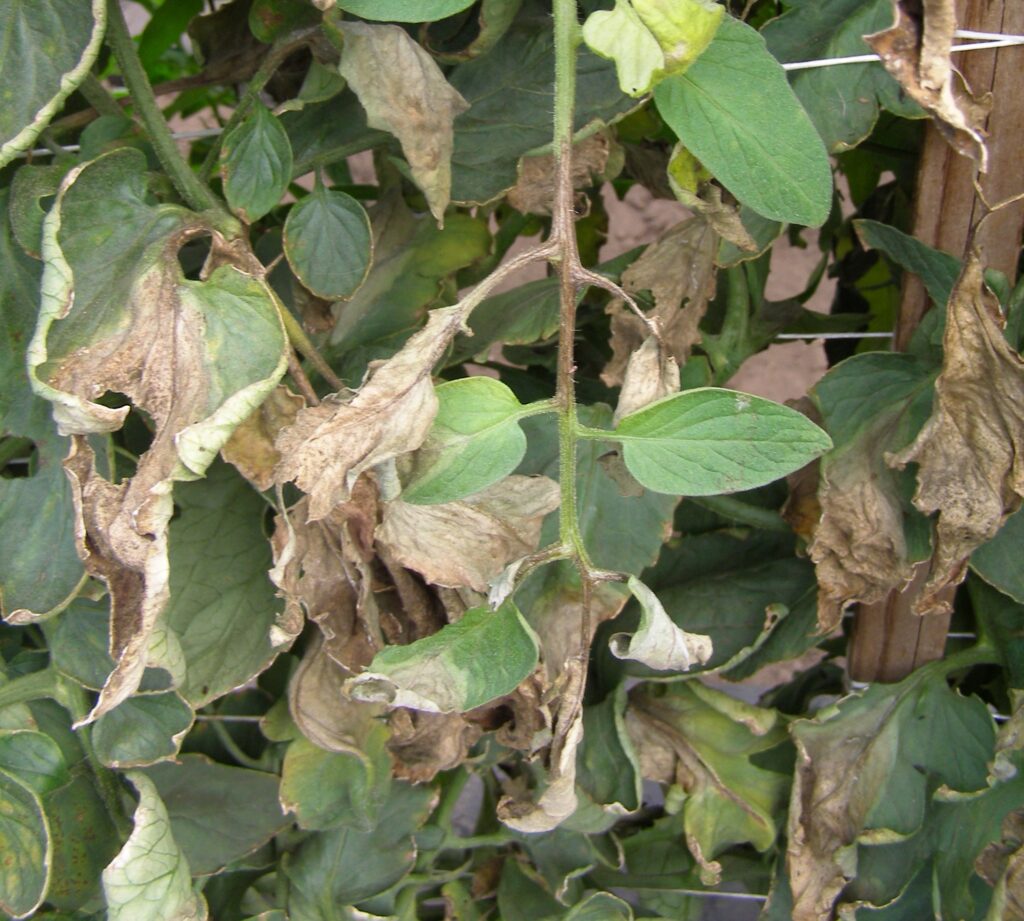
It spreads fast in cool, wet weather conditions.
Early blight occurs on the foliage, stem, and fruit of tomato plants.
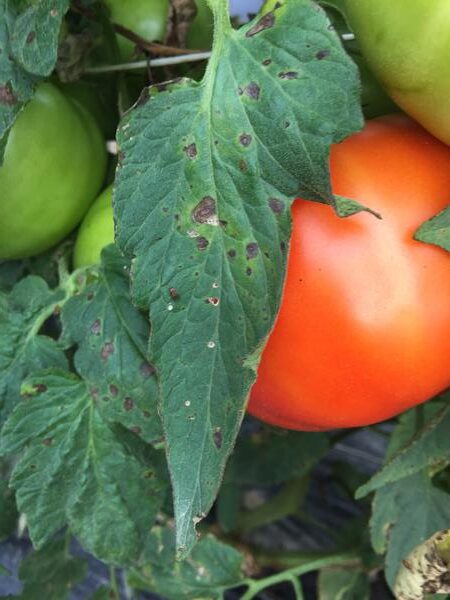
It first appears as small brown-to-black lesions on older foliage. The tissue surrounding the initial lesion may become yellow, and when lesions are numerous, entire leaves may become chlorotic.
As the lesions enlarge, they often develop concentric rings, giving them a “bull’s eye” or “target-spot” appearance. As the disease progresses, plants can become defoliated, reducing both fruit quantity and quality.
Fruit can become infected either in the green or ripe stage through the stem attachment. Fruit lesions can become quite large, involve the whole fruit, and have characteristic concentric rings.
Infected fruit often drops, and losses of 30-50% of immature fruit may occur.
These two diseases are the most destructive in tomato farming. To be safe in tomato farming, preventive spraying is the most recommended approach.
Once the crop is infected, controlling it becomes almost impossible.
Apply fungicides such as Ridomil Gold, Hetor 720WP, and Mistress 72WP early, from the third week of transplanting to harvesting, at intervals of 7-14 days, depending on weather intensity—how cold, cool, or wet it is.
Bacterial wilt:
The initial symptom in tomato farming is the wilting of young leaves during the heat of the day, with recovery overnight.
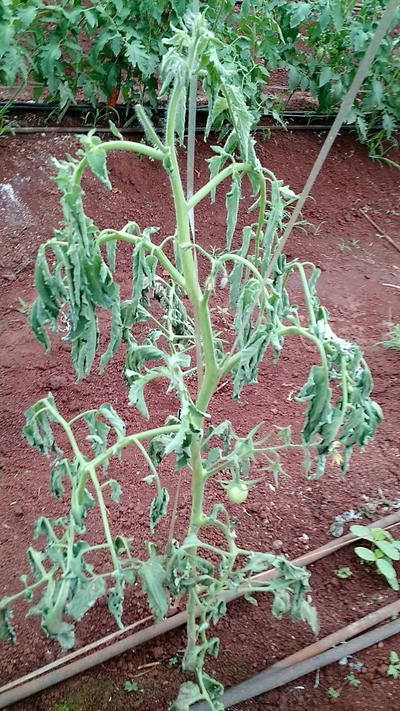
If conditions are favourable, symptoms quickly progress to general wilting, yellowing, and eventually complete plant collapse.
Splitting affected stems lengthwise may reveal long, narrow, yellow-to-brown streaks in the vascular tissue.
A milky white ooze may exude from affected stems cut crosswise, and streams of bacteria may flow out of cut stems suspended in water (bacterial streaming).
The bacteria are both soilborne and waterborne. They can survive in the soil on the roots of non-host plants, in infected weed hosts, and in infested plant debris.
The pathogen is disseminated in infested soil on equipment, stakes, and workers’ clothing. It can also be carried in run-off water. Seed transmission is not thought to be important for this disease. However, the pathogen can be brought in on infected transplants.
Bacterial wilt is difficult to manage once the pathogen has been introduced into a field, because the pathogen can persist in the soil for many years.
Therefore, the priority in tomato farming is to prevent the introduction of the pathogen if it is not yet present. This requires the use of pathogen-free transplants, irrigation only with non-infested sources of water, and clean stakes and equipment.
Septoria leaf spot
Leaf spot is one of the most destructive diseases in tomato farming. This disease can destroy most of a plant’s foliage, resulting in sunscald, failure of fruit to mature properly, and low yields.
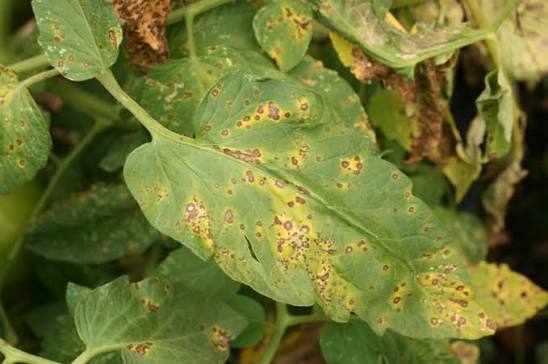
Once infections begin, they can spread rapidly from the lower to the upper tomato canopy.
Symptoms consist of circular tan-to-grey lesions with a dark brown margin that appear on lower leaves first, after the first fruit set. If conditions are favorable, lesions can enlarge rapidly.
To prevent leaf spot in tomato farming, apply Score fungicide early, before infestation.
ALSO READ: Onion Farming in Kenya: How to Grow High-Quality Onions from Seeds to Harvesting 2026
The most destructive Tomato pests
Tuta absoluta (tomato leaf miner)
This is the most destructive insect pest in tomato farming.
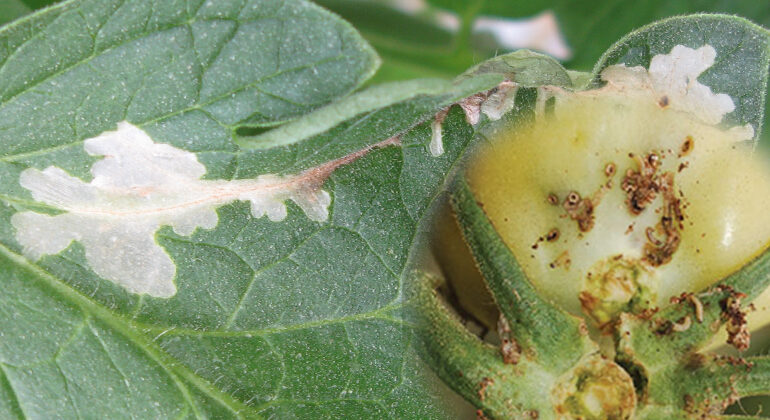
Infestation of tomato plants occurs throughout the entire crop cycle. Feeding damage is caused by all larval instars and throughout the whole plant.
On tomato leaves, the larvae feed on the mesophyll tissue, forming irregular leaf mines which may later become necrotic.
Larvae can form extensive galleries in the stems, which affect the development of the plants.
Fruits are also attacked by the larvae, and the entryways are used by secondary pathogens, leading to fruit rot. The extent of infestation is partly dependent on the variety.
In tomato farming, early applications of insecticides such as Tihan, Emmaron, Escort, or Amigad can help prevent and control Tuta absoluta.
Whiteflies
Whiteflies are found mostly on the undersides of leaves. They fly readily when plants are disturbed.
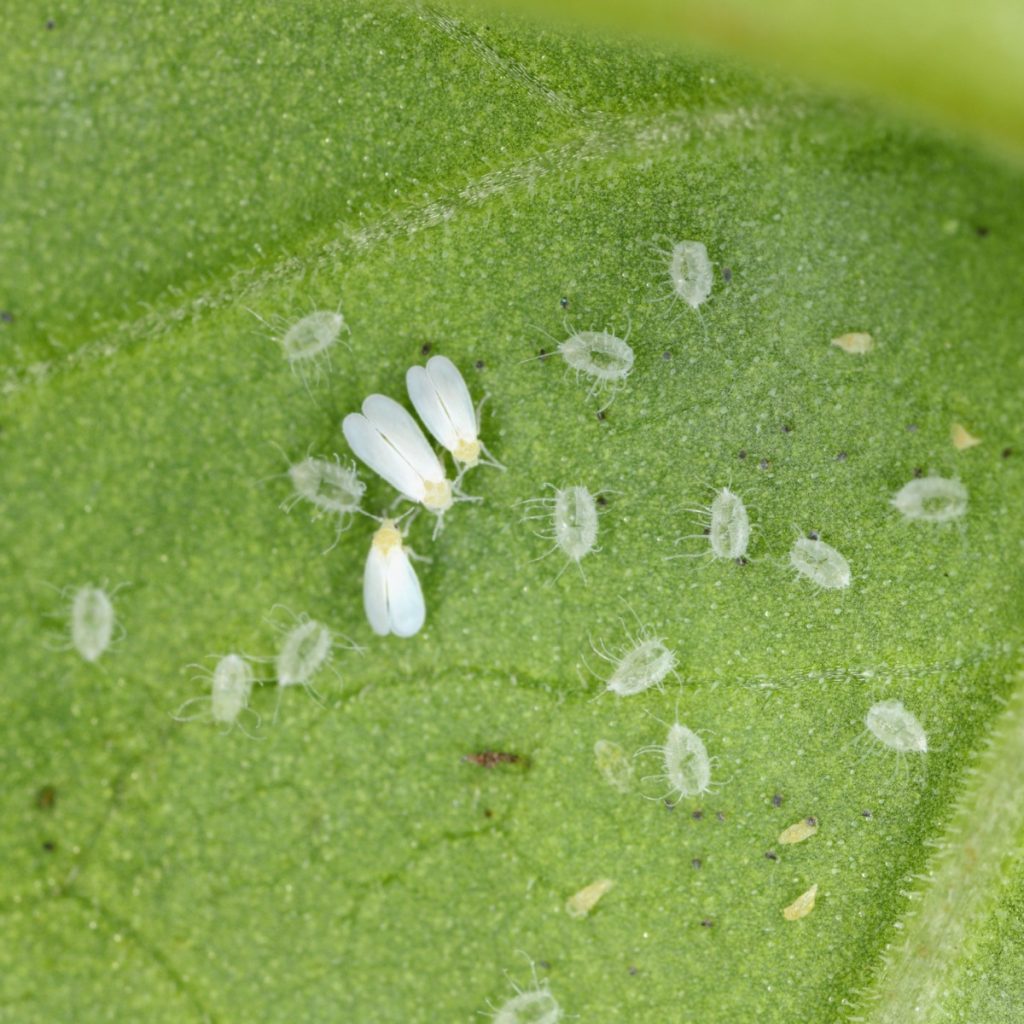
Tuta absoluta cause damage to leaves by feeding, which causes leaves to yellow and curl, and by the production of honeydew, which causes leaves to appear shiny or blackened (from sooty mold growing on the honeydew).
Feeding by whiteflies is especially damaging because it also causes fruit to ripen unevenly.
In recent years, the greenhouse whitefly is the vector of tomato infectious chlorosis virus, a virus capable of causing heavy losses in the production of fresh-market and greenhouse tomatoes.
Apply Oberon Speed and/or, alternatively, Profile, early from 30 days from transplanting, to control it.
Aphids
Aphid infestations may result in wilting, but this damage is usually not of great concern unless the crop is water-stressed.
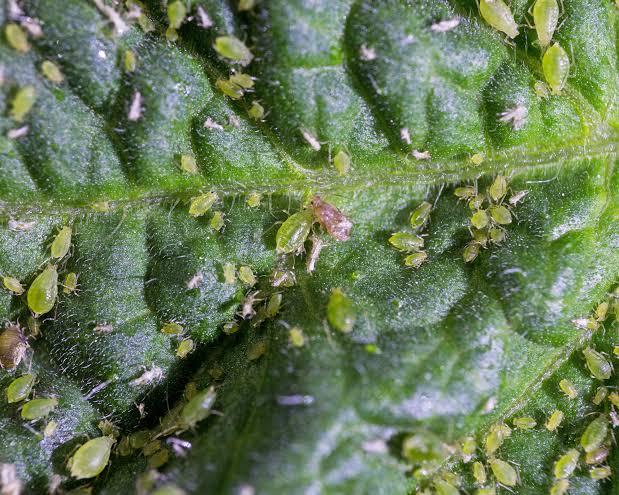
Research indicates that early-season infestations may delay maturity but usually do not result in yield loss unless other factors are also present that enhance the injury. It can be controlled with Oberon Speed and/or Profile.
Thrips
The primary damage caused by thrips to tomatoes is the vectoring of Tomato Spotted Wilt Virus.
The virus can only be acquired by the immature stage of thrips, whereas plant-to-plant transmission primarily occurs by adults.
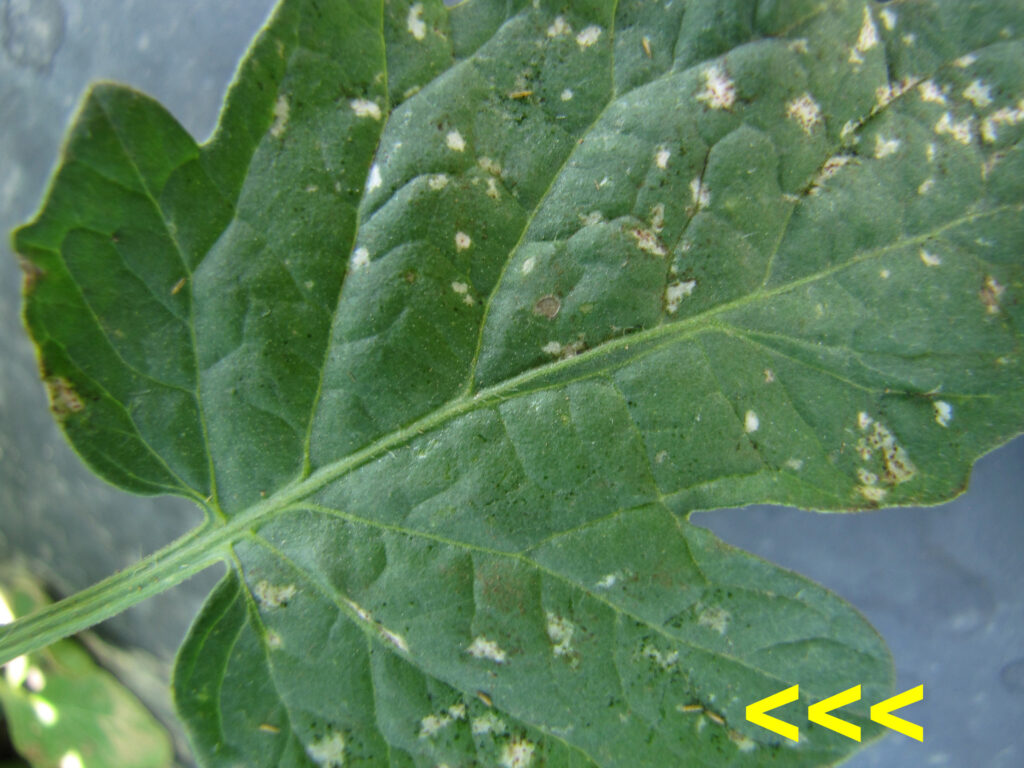
High numbers of thrips can cause damage with their feeding, which distorts plant growth, deforms flowers, and causes white-to-silvery patches on emerging leaves that often have tiny black faecal specks in them.
Both aphids and thrips can be controlled by Profile and Oberon insecticides.
The farm should always remain clean of weeds, as they tend to increase competition for nutrients and harbour pests.
The majority of these hybrid tomato varieties require staking as they grow, to support the crop against breakage.
Depending on weather and crop management, most tomato varieties mature in 75-90 days, with a long harvesting period of 2-3 months.
All these tomato seeds and chemicals are available at our farm shop, and you can order them HERE.