
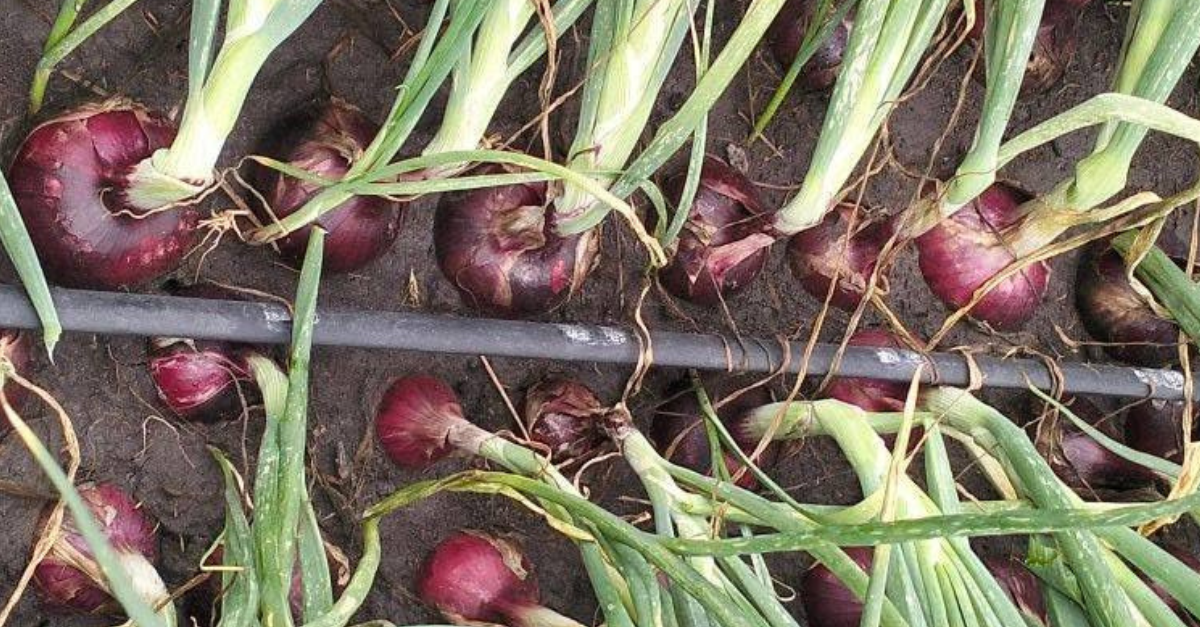
- Before onion farming, identify the best variety and the market.
- Plant in loam or sandy loam, which is fertile.
- Have a permanent water source and irrigation system.
- Neptune F1, Russet F1, Jamber F1, Red Coach F1, and African Red F1 are the best onion varieties to plant.
- February, July, and November are the best months to plant onions in Kenya
- Raise your own seedlings and plant at a spacing of 15cm by 10cm.
- Use DAP,NPK.CAN fertlizers to boost growth.
- Ensure to control thrips, purple blotch,Rust and downy mildew.
A wise farmer knows that any success in onion farming in Kenya lies solely in producing what buyers love most at high quality and at the ideal time—that is, which bulb onion variety is moving fast in the market.
After settling on a variety, soil type is key. Bulb onions are tuber crops and thrive in loam and sandy loam soil.
The soil should be fertile and well-drained to avoid rotting. Compact soil and clay soil have poor drainage and produce thin-sized bulb onions.
A permanent water source is a must. Onion farming requires a lot of water for healthy establishment, bulb formation, and bulb expansion.
Even when farming during the rainy season, it’s always good to have a backup irrigation system in case the rain subsides. Ensure your farm does not flood, as you can lose everything to one night of flooding.
Bulb onion farming in Kenya can be costly, as they are heavy feeders.
That is, they need enough fertilisers and chemicals to control diseases and pests.
The cost of onion farming in Kenya is Ksh 350,000–400,000, depending on variety and location.
You therefore must have enough capital; otherwise, it will be a stressful venture.
Best Onion Varieties to plant in Kenya —Hybrid and OPV
In onion farming, you can choose hybrid varieties or Open Pollinated Varieties (OPV).
Hybrid varieties yield more, have good disease tolerance, but are expensive. OPV has low yields, cannot withstand most diseases, but is very cheap.
For onion farming, Neptune F1, Russet F1, Jamber F1, Red Coach F1, and African Red F1 are the best onion varieties to plant in Kenya in 2026.
The best open-pollinated onion varieties are Red Creole, Bombay Red, and Red Pinoy.
Neptune F1 is a flattened globe, high-yield hybrid onion variety with a firm and shiny deep-red bulb.
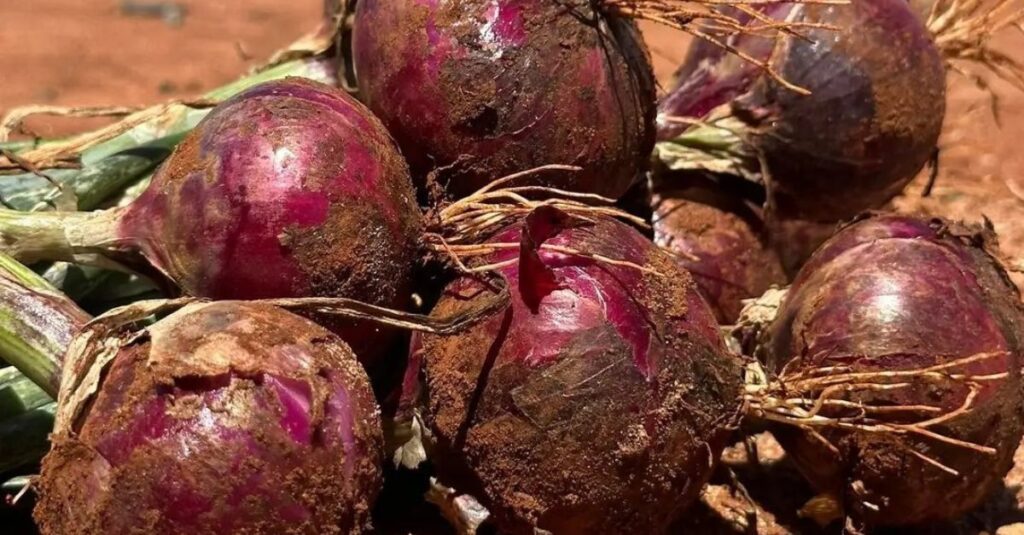
It has a maturity of 85–120 days. Neptune can yield 15–20 tons per acre, depending on management. It is the most sought-after onion variety for its long storage period of 4–5 months after harvest.
Russet F1 is a hybrid onion variety with a medium to flattened globe shape (granex) bulb with red skin colour.
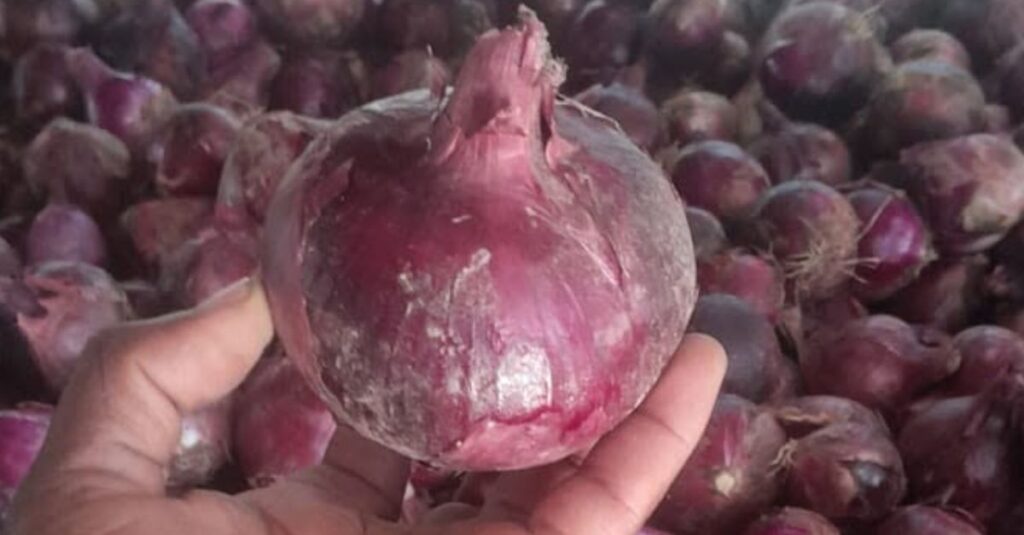
It is an early-maturing variety—80–90 days. Russet F1 can yield 18–25 tons per acre, depending on management. It has a storage period of 4–5 months.
African Red F1 is a hybrid onion variety that has uniform deep red bulbs with very good skin retention.
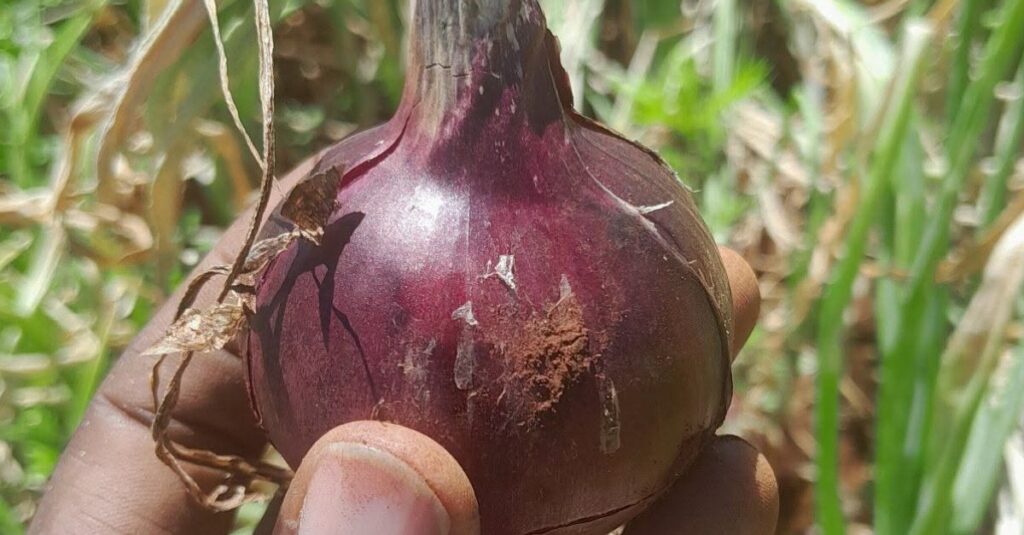
It has a maturity of 90–120 days. African Red F1 can yield 15–20 tons per acre, depending on management.
It also has an excellent after-harvest shelf life.
Red Coach F1 is a hybrid onion variety that produces flattened globe-shaped bulb onions.
The bulbs are dark red and medium to large in size. It is an early-maturing variety—80–90 days.
Under good management, it can yield 20–30 tons per acre. It has an after-harvest storage ability of up to 3 months.
Jamber F1 is a hybrid onion variety best suited for warm areas. It produces uniform deep-red bulbs and matures in 85–90 days. It can produce 10–15 tons, depending on management.
Other varieties to consider for onion farming include Red Creole, which is an OPV that produces medium-sized onion bulbs and matures in 110 days. Red Pinoy, an OPV, is an early-maturing variety producing medium-sized bulbs.
Best Months for Onion farming in Kenya
February, July, and November are the best months to plant onions in Kenya in 2026.
However, with changing weather patterns and market supply, other months can also be ideal.
How to Raise Onion Seedlings
In onion farming, you can opt to outsource seedlings or raise your own. Outsourcing seedlings is expensive compared to raising them.
Create a raised seedbed with a 1 m width and a length of your choice. Plough well to loosen the soil. The soil should be loam and fertile.
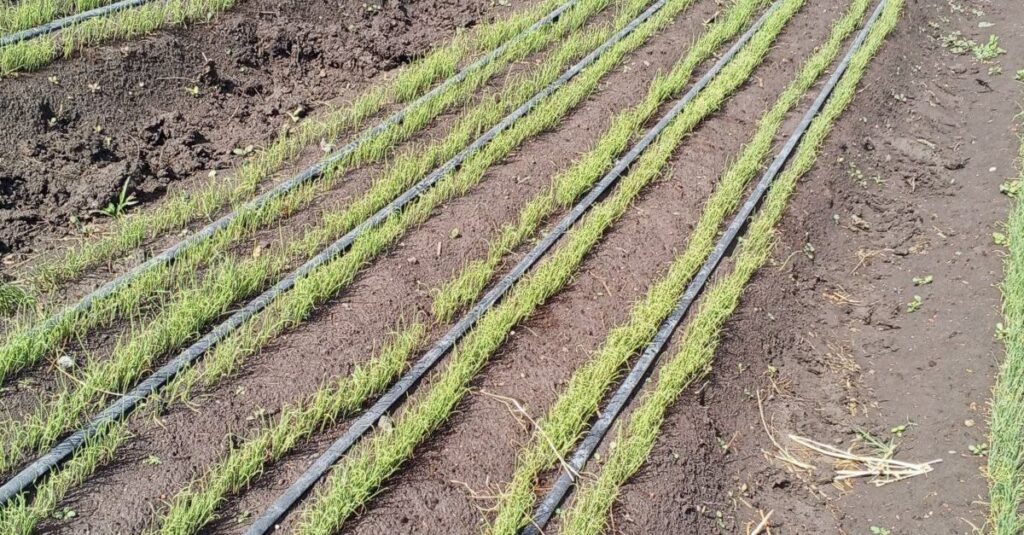
Drill a shallow furrow and sow your onion seeds sparingly. Cover them with loose soil and irrigate.
To hasten germination, you can cover it with loose, dry grass or a shade net. Remove it on the third day.
Onion seedlings take 5–6 weeks to mature to pencil size. The onion seed rate per acre is 1 kg, though some may use 1.25–1.5 kg.
How to Plant Onions
Make a 1 m-sized bed, well-ploughed; add decomposed manure and mix it with soil.
The ideal spacing for bulb onions is 15 cm by 10 cm, though 10 cm by 8 cm will also work.
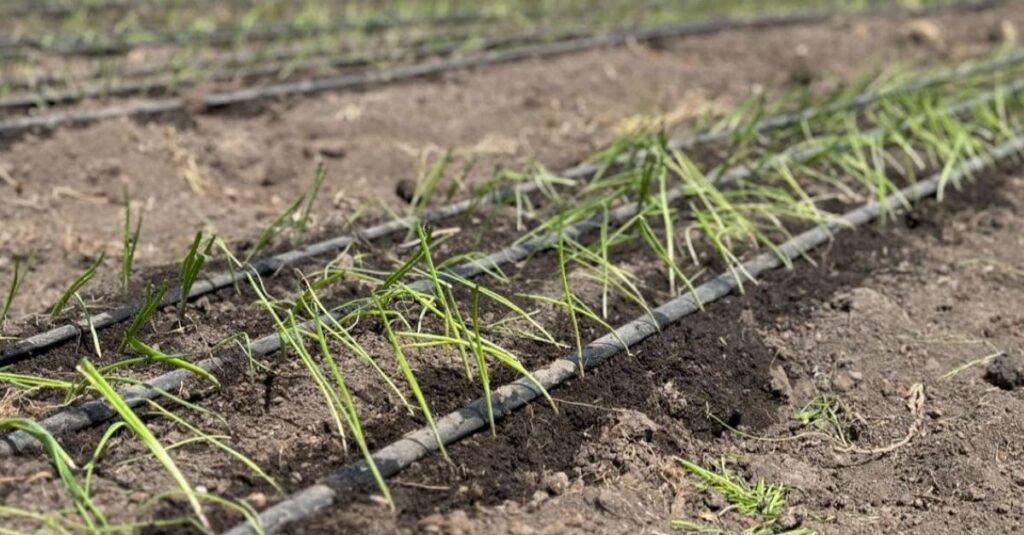
The wider the spacing, the bigger the bulb size; the smaller the spacing, the smaller the size.
On the eve of transplanting, apply Redomil Gold to prevent damping off. Some farmers may prefer trimming the shoots of seedlings before transplanting, but it’s not necessary.
Do not use DAP fertilizer at transplanting. It will be top-dressed after 7 days of transplanting, when roots are well-developed and able to absorb nutrients.
After planting, irrigate. If it’s raining, there is no need to irrigate. But for the dry season, irrigation should be done daily or every other day.
You can also drench with Optimiser or Easygro starter on the same day, followed by applications every 7 days in the first month.
Best Fertilizers for Onion farming
DAP 18.46.0, NPK 17.17.17, and CAN fertilizer are the best fertilizers for bulb onion farming in Kenya.
The three provide phosphorus, nitrogen, potassium, and calcium—ideal for high yield.
ALSO READ: Harvesting small-sized bulb onions? This is why
DAP 18.46.0 provides high phosphorus levels required for root development and good nitrogen ideal for leaf and shoot establishment.
It should be applied 7–14 days after transplanting. Apply 50 kg of DAP per acre.
NPK 17.17.17 has a uniform blend of nitrogen, phosphorus, and potassium ideal for uniform, robust crop growth.
It should be applied at the beginning of the second month to aid in bulb formation. Apply 50–100 kg of NPK 17.17.17 per acre.
It can be supplemented with NPK-based foliar fertilizers such as Wuxal Macromix or Maxigrow Vegetative.
At the beginning of bulb expansion—the third month—apply CAN fertilizer at a rate of 50–100 kg per acre. You can also apply tuber-based foliar spray to enhance bulb formation.
At all times, fertilizers should not come into contact with leaves or stems, as they can scorch them.
Apply fertilizer to wet soil, or make sure you irrigate immediately after application on dry soil.
Avoid applying high-nitrogen fertilizers in the last month, as this can slow bulb expansion and the curing process.
Common Onion Diseases
Downy mildew is a fungal disease that spreads fast in cool, humid conditions.
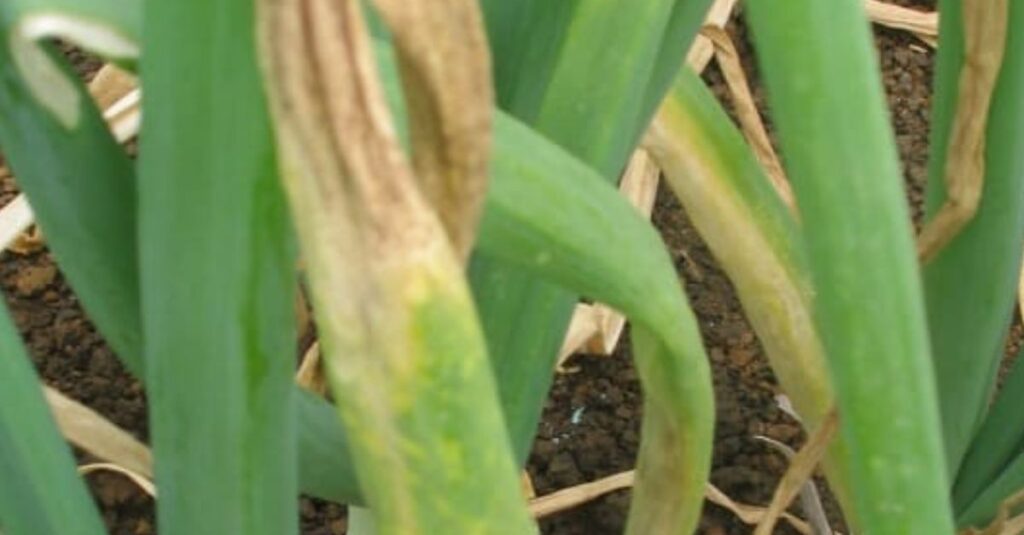
The leaves form yellow patches; leaf tips shrink, turn pale brown, and later die.
It can be prevented by planting high-tolerant varieties and applying Mancozeb-rich fungicides such as Redomil Gold or Hetor 720WP.
Purple blotch is a fungal disease that forms small white spots on the leaves. It is the most destructive disease in onion farming.
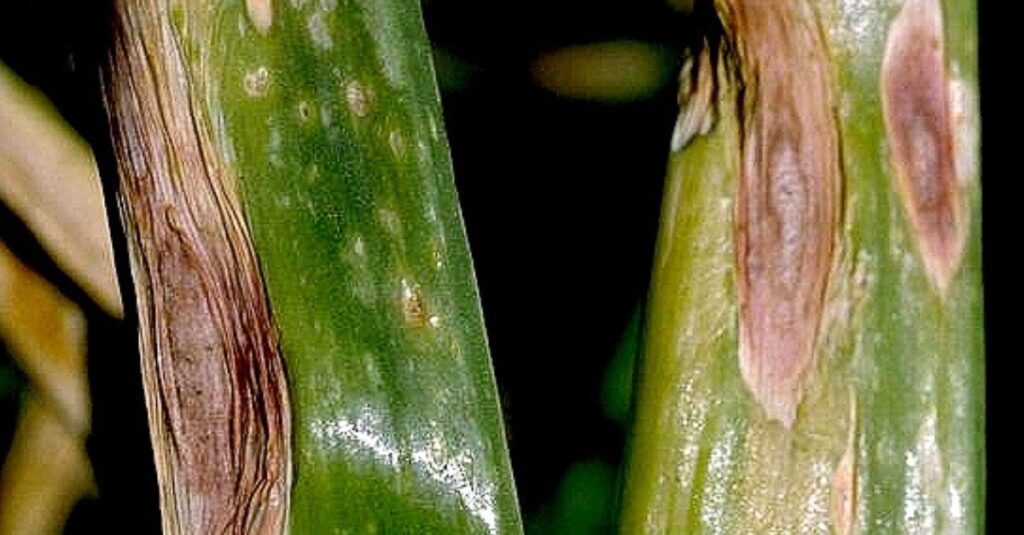
This may increase to large purple blotches surrounded by a yellow to orange border. Use Hetor 720WP to control it.
Rust is a fungal disease that forms small, reddish, dusty spots on leaves.
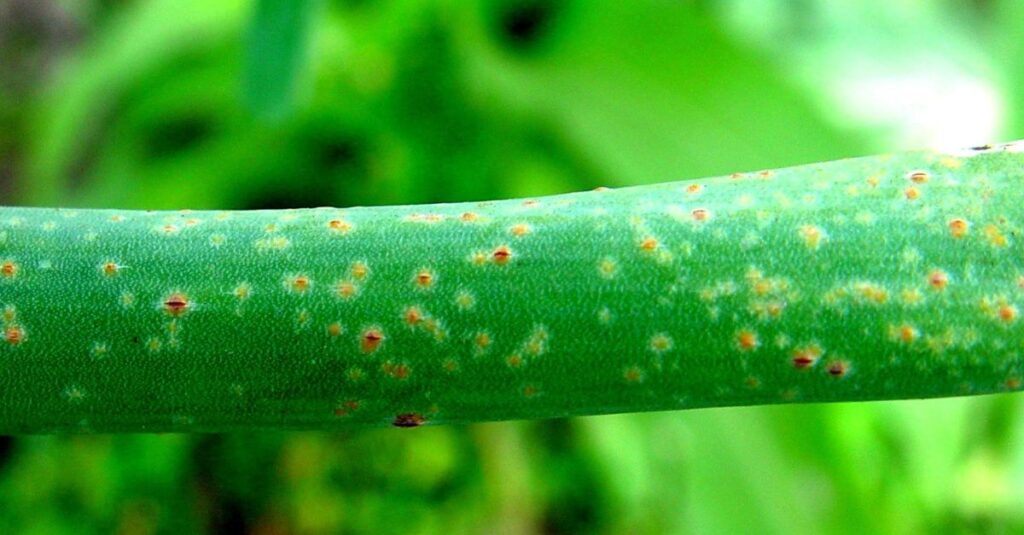
Heavily infected leaves turn yellow and die prematurely. Use copper-based fungicides such as Issacop to control it.
Avoid irrigating your onions when the leaves have dew—late evening—as this introduces the disease and hastens its spread.
During wet months when doing onion farming, reduce the interval of fungicide application to twice per week.
The main goal is to prevent infection. Once these fungal diseases appear on your farm, healing is hard, and they spread rapidly.
Make it a routine to apply Redomil Gold and Score in all your applications, especially in the first and second months.
Common Pests in Onion Farming
Thrips are the most destructive pests in bulb onion farming.
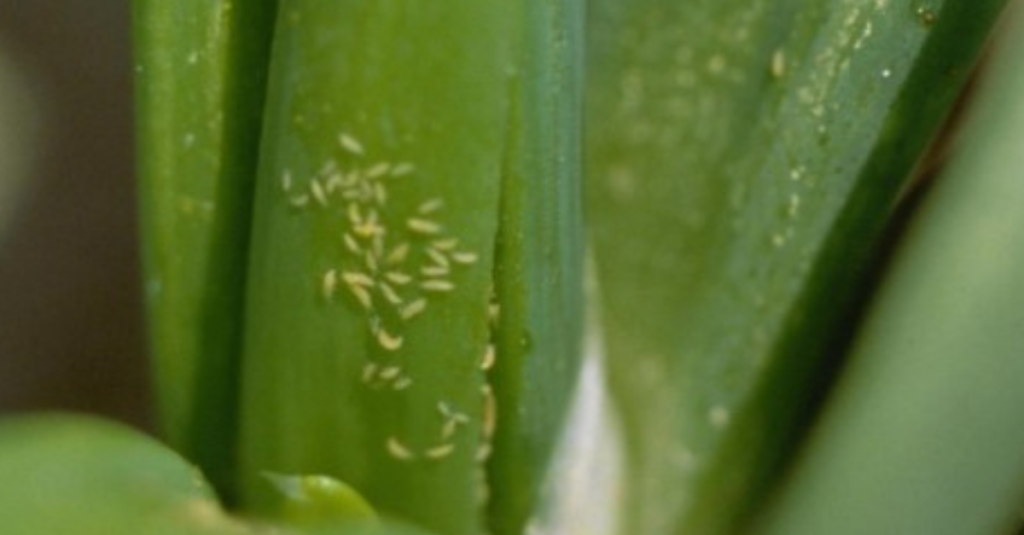
They enter the plant mostly at the vegetative stage, where bulb formation begins.
Adult thrips and nymphs feed on the base of the plant within the leaf sheaths.
The attacked leaves have sunken, silvery patches which later wither, dry up, and die.
Apply Emmaron insecticide to control them.
Harvesting
Most onion varieties are ready for harvesting in 85–150 days. Often, the leaf tops begin to discolour, wither, and fall.
Farmers can begin curing—a process of drying off the necks and leaves.
This can be done by rolling a drum of water over the top of the crop.
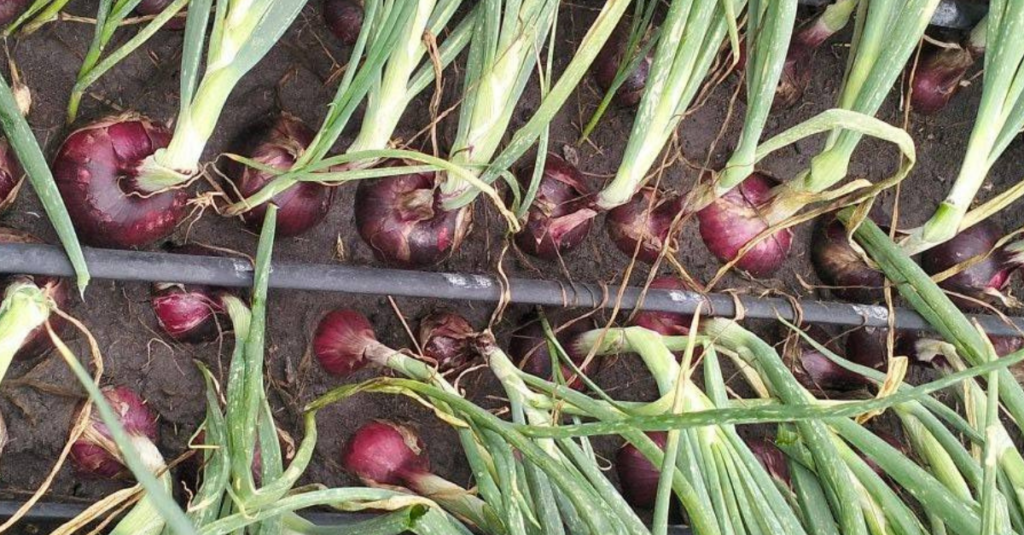
Curing prolongs the shelf life of the bulb onions. Harvesting should be done when dry.
Do not irrigate the last 2–3 weeks before harvest to hasten curing and avoid regrowth.
Regardless of the after-harvest shelf life of the variety you choose, never store your bulb onions in the hope that prices will rise.
You might end up losing all of it. Sell immediately at harvest if possible, and for cash, not on credit.