
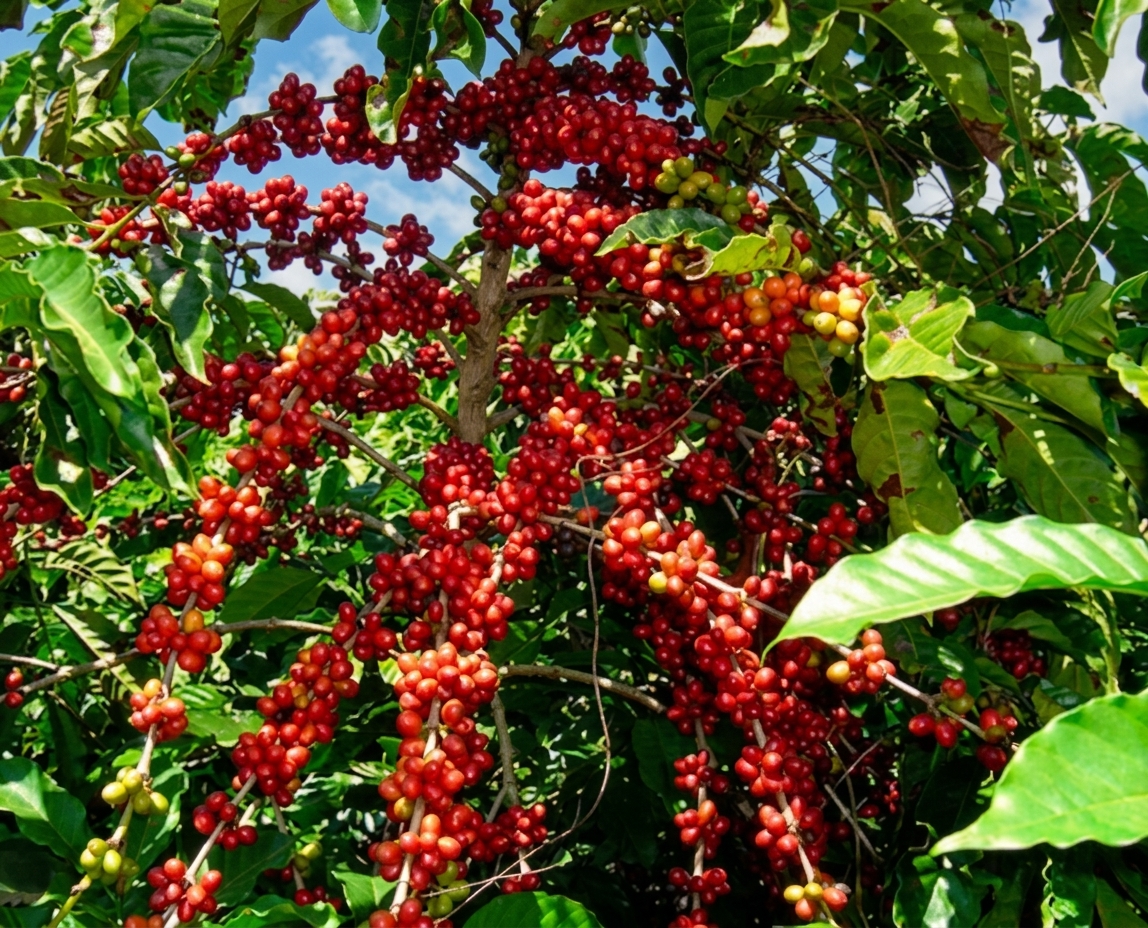
Planting the Batian coffee variety is the worst mistake you can make in coffee farming.
Praised as the game-changer of coffee farming — the money-maker, the best variety — by those who haven’t planted it long enough to understand why the pioneer farmers who planted it since its inception in 2010 no longer have a single stem of it in their farms.
In fact, to the pioneers of Batian coffee, a mention of the name shakes them to the core.
Released in 2010 by the Coffee Research Institute, it saw high adoption in 2017–2018, to the extent that many farmers uprooted native varieties like SL28, K7, and even Ruiru 11.
Three to four years later, farmers were making a massive shift back to their native varieties. Thousands of Batian bushes were uprooted in less than two years.
So what changed their minds, despite the massive first-harvest yield?
Described by World Coffee Research as a tall variety combining high yields, intermediate resistance to coffee leaf rust, resistant to coffee berry disease, and good cup quality, Batian proved not to be an ideal investment.
Why Batian coffee?
Batian produces a very large bean size and a cup of very good quality.
However, it performs optimally only at low altitudes (1,000–1,200m), has intermediate resistance to coffee leaf rust, and is highly susceptible to nematodes.
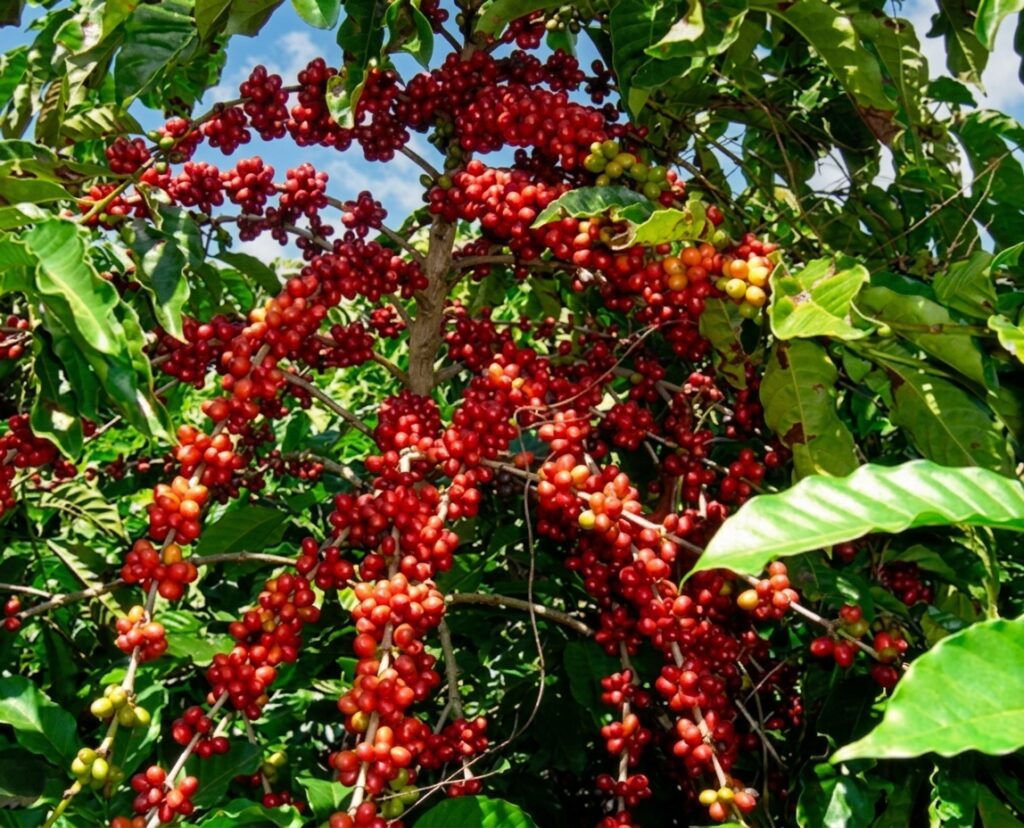
It does have good resistance to coffee berry disease, a fungal disease that affects the fruit.
The year of first production — when the tree produces its first fruit — is normally two years for Batian, depending on management.
Unlike most native varieties, it is not a heavy feeder.
ALSO READ: The Best Crops to Grow in August–September 2026
Batian has a high cherry-to-green-bean outturn: the bean size is large relative to the fruit.
This is a good thing, as it ultimately translates to heavier green coffee.
Batian is a composite variety, crossing several pure-line varieties: SL28, SL34, Rume Sudan, N39, K7, SL4, and the Timor Hybrid.
The Bad Side of Batian Coffee
The list of Batian’s good features could go on, yet farmers and large multinational coffee estates still uprooted it.
So what caused this, to the point that it’s now hard to find a seasoned, experienced coffee farmer or estate growing Batian?
This is the dark side of the Batian coffee variety that no one talks about.
Batian has long primary branches with many internodes compared to native varieties.
This is good for high yield, but if the trees are wrongly spaced, the branches interlock, making the crop hard to manage — hard to spray, weed, and even fertilize.
This also speeds the spread of leaf rust, to which Batian has the least resistance.
The recommended spacing for SL varieties — 2m by 2m — is wrong for Batian.
Instead, 2.5m by 2.5m, or at least 8ft by 8ft, is the best spacing for this variety.
Despite Batian being described as a low feeder, its many internodes disprove this.
What most pioneer farmers realized after the first harvest is that applying fertilizer at the same rate as Ruiru 11 — 300–350g per tree — was not sufficient.
Batian called for 400–500g per tree. Farmers who fed it only around 100g per tree saw yields decline at a faster rate.
Batian also suffers from significant water stress, especially in hot, dry months. Worst of all is the high cost of controlling leaf rust in Batian. It is also highly susceptible to nematodes.
In the end, yields continued to decline significantly in subsequent harvests.
Batian showed that it needed a completely different management approach from that used for native varieties like Ruiru 11 and the SLs.
Pioneer coffee farmers and estates could not keep up with this. It was not sustainable.
The only viable, profitable, and sustainable solution was to uproot it and replace it with grafted Ruiru 11.
The shift was massive. That’s why it’s hard to find a successful coffee farmer or estate operating in the last two to three decades that still has Batian coffee on their farm — only newcomers do.
That’s also why you can’t find Batian coffee seedlings from Sasini, the great producer and seller of the best coffee seedlings in Kenya.
I first came across Batian coffee as an intern at Sasini a decade ago.
I remember my supervisor at the time, Mr. Kinuthia, describing it as the worst variety ever released, and predicting that farmers who had planted it would soon uproot it.
A few years later, true to his words, they uprooted their Batian coffee and went back to grafted Ruiru 11.