 Kelvin Wairimu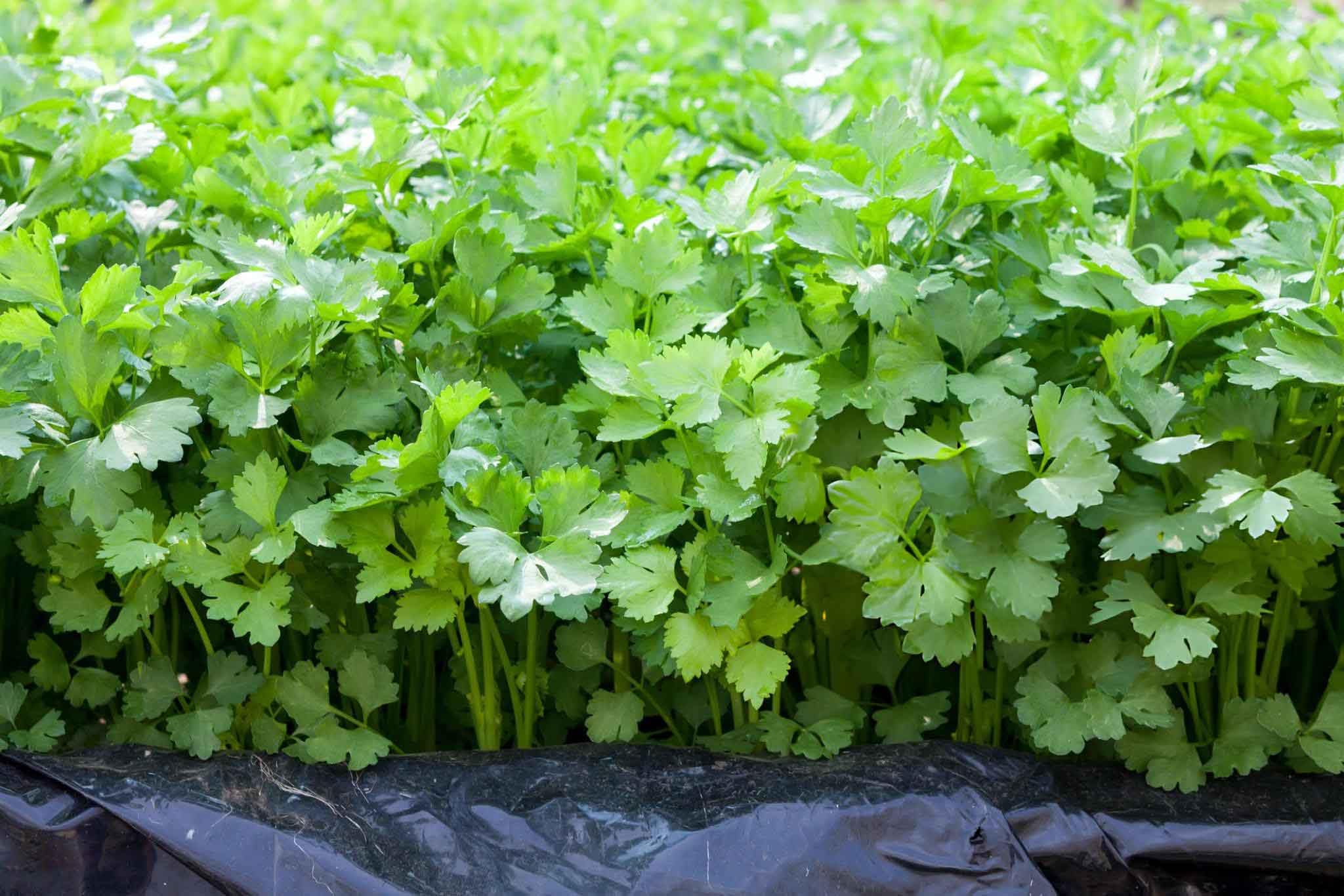
For a long time, we have encouraged farmers to venture into dhania (coriander) farming as we believe it is one of the most profitable crops any farmer can grow. But then, how profitable is it really?
Today we answer the question: how much can you make in dhania farming in Kenya?
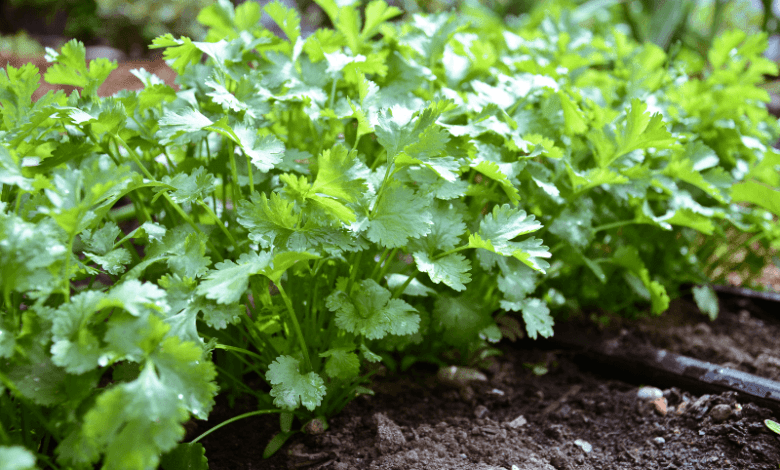
Coriander is a sweet herb loved for its aromatic flavour. It is the most consumed herb or spice in Kenya.
In this case, we shall look at two scenarios where farmers decide to lease land or grow on their own farm.
Read Also: How to grow dhania (coriander) in under 40 days
With Own Land
The land must be ploughed and mixed evenly with decomposed manure to add fertility. For faster growth and big, strong-leaved dhania, manure is a must—at least 2-5 tons per acre, which will cost about KSh 10,000. The farm must be divided into 4-8 portions planted independently after every one week.
This is to streamline marketing and avoid over-growing before the market is ready. It also lowers pressure to sell at low prices, as farmers can look for a wider market and supply continuously, creating trust with buyers. Planting a whole acre at once means the crop will all mature at once, and if there is no ready market, it will overgrow beyond marketable status.
An acre needs about 2kg of dhania, which costs about KSh 2,000. Always avoid hooked dhania seeds in the open market as they have problems with germination, early flowering, and less aroma.
Coriander seeds from Royal Seeds are the best as they have a good aroma, good germination, and can grow tall up to 50cm and yield more.
Land preparation costs KSh 6,500. To raise dhania up to maturity (45-60 days), it may cost the farmer another KSh 10,000 for labour and other costs. Since it does not need much fertiliser and insecticides, the total cost comes to KSh 28,500.
Under good management, an acre can yield at least 1,000 kg. Normally, a kilo goes for KSh 40-50. In this case, we shall use KSh 45. This means the farmer will earn KSh 45,000 as revenue after selling 1,000 kg at KSh 45. That’s a profit of KSh 16,500 in just two months.
Farmer Leasing Land
For the case of a farmer who leased land at KSh 20,000 per acre per year (KSh 1,700 per month or KSh 3,400 per 2-month crop season):
If you add KSh 3,400 for leasing land to KSh 28,500 production cost, the total comes to KSh 31,900. Even in this case, the farmer makes a profit of KSh 13,100, assuming they harvest 1,000kgs and sell at KSh 45 per kilo.
Annual Returns
The good thing about dhania is that you can grow it 6 times in a year. This gives a cumulative profit of KSh 99,000 for a farmer with own land and KSh 78,600 for a farmer leasing land.
Even if the farmer installs a drip irrigation system that costs about KSh 150,000, they can recover their investment in 2-3 years.
Market Considerations
It is also good to note that prices keep fluctuating depending on market supply and weather changes. Normally, dhania prices are usually high in the dry season.
When targeting large-scale production, aim at selling in bulk in mass markets for quick returns. Retailing might be costly, especially if the volume is high and local buyers are few.
Cost Summary Per Crop Cycle (2 months)
Farmer with Own Land:
- Total Cost: KSh 28,500
- Revenue (1,000kg @ KSh 45/kg): KSh 45,000
- Profit per cycle: KSh 16,500
- Annual Profit (6 cycles): KSh 99,000
Farmer Leasing Land:
- Total Cost: KSh 31,900
- Revenue (1,000kg @ KSh 45/kg): KSh 45,000
- Profit per cycle: KSh 13,100
- Annual Profit (6 cycles): KSh 78,600
ROI and Payback Period Analysis
What is ROI (Return on Investment)?
ROI tells you how much profit you make for every shilling you invest. It’s like asking: “If I put KSh 100 into this business, how much extra money will I get back?”
Formula: ROI = (Profit ÷ Investment) × 100
What is Payback Period?
Payback period tells you how long it takes to get back all the money you invested. It’s like asking: “How long before I recover my initial investment?”
Formula: Payback Period = Investment ÷ Profit per period
Calculations for Different Scenarios
1. FARMER WITH OWN LAND (Per Crop Cycle – 2 months)
Investment: KSh 28,500
Profit: KSh 16,500
ROI = (16,500 ÷ 28,500) × 100 = 58%
Payback Period = 28,500 ÷ 16,500 = 1.7 cycles (about 3.4 months)
Annual Performance (6 cycles per year):
- Total Investment: KSh 171,000 (28,500 × 6)
- Total Profit: KSh 99,000
- Annual ROI: 58%
2. FARMER LEASING LAND (Per Crop Cycle – 2 months)
Investment: KSh 31,900
Profit: KSh 13,100
ROI = (13,100 ÷ 31,900) × 100 = 41%
Payback Period = 31,900 ÷ 13,100 = 2.4 cycles (about 4.8 months)
Annual Performance (6 cycles per year):
- Total Investment: KSh 191,400 (31,900 × 6)
- Total Profit: KSh 78,600
- Annual ROI: 41%
3. WITH DRIP IRRIGATION SYSTEM (Initial Investment)
If a farmer invests KSh 150,000 in drip irrigation:
Farmer with Own Land:
- First year total investment: KSh 171,000 + KSh 150,000 = KSh 321,000
- First year profit: KSh 99,000
- First Year ROI = (99,000 ÷ 321,000) × 100 = 31%
- Payback Period for irrigation = 150,000 ÷ 99,000 = 1.5 years
Farmer Leasing Land:
- First year total investment: KSh 191,400 + KSh 150,000 = KSh 341,400
- First year profit: KSh 78,600
- First Year ROI = (78,600 ÷ 341,400) × 100 = 23%
- Payback Period for irrigation = 150,000 ÷ 78,600 = 1.9 years
What Do These Numbers Mean?
ROI Explanation:
- 58% ROI means for every KSh 100 you invest, you get KSh 58 profit (plus your original KSh 100 back)
- 41% ROI means for every KSh 100 you invest, you get KSh 41 profit
- Any ROI above 30% is considered very good in farming
- Dhania farming offers excellent returns compared to many other crops
Payback Period Explanation:
- 1.7 cycles (3.4 months) means you recover your investment in less than 4 months
- 2.4 cycles (4.8 months) means you recover your investment in less than 5 months
- Very fast payback – much better than sukumawiki (19 months) and comparable to green maize (4 months)
- The irrigation system pays for itself in about 2 years
Key Insights for Farmers:
- Dhania farming is highly profitable – 58% ROI with own land, 41% with leased land
- Fast payback period – recover investment in 3-5 months
- Multiple cycles per year – you can grow dhania 6 times annually for consistent income
- Leasing land is still profitable – unlike sukumawiki, dhania remains profitable even when leasing
- Drip irrigation is worth it – pays for itself in less than 2 years and increases efficiency
Why Dhania is a Good Choice:
- Multiple harvests per year – 6 cycles means 6 income opportunities
- Short growing period – only 45-60 days from planting to harvest
- Quick cash flow – get your money back in 3-4 months
- Profitable even with leasing – 41% ROI is still excellent
- Low input costs – minimal fertiliser and pesticides needed
- Consistent demand – most consumed herb in Kenya
Conclusion
Dhania farming in Kenya is indeed profitable for both farmers with their own land and those leasing land.
The key to success is staggered planting to ensure a continuous supply, using quality seeds, proper land preparation with manure, and targeting bulk buyers for quick sales.
With 6 growing cycles per year possible, dhania offers consistent income throughout the year, making it an attractive option for small-scale farmers.
Recommendation:
Dhania farming is an excellent choice for farmers looking for quick returns and consistent income.
With 58% ROI (own land) or 41% ROI (leased land) and payback periods of less than 5 months, it significantly outperforms crops like sukumawiki.
Even farmers leasing land can make good profits.
If you can invest in drip irrigation, do so – it will pay for itself in less than 2 years while making farming easier and more efficient.
Focus on staggered planting and bulk sales to maximise profits.
About Post Author