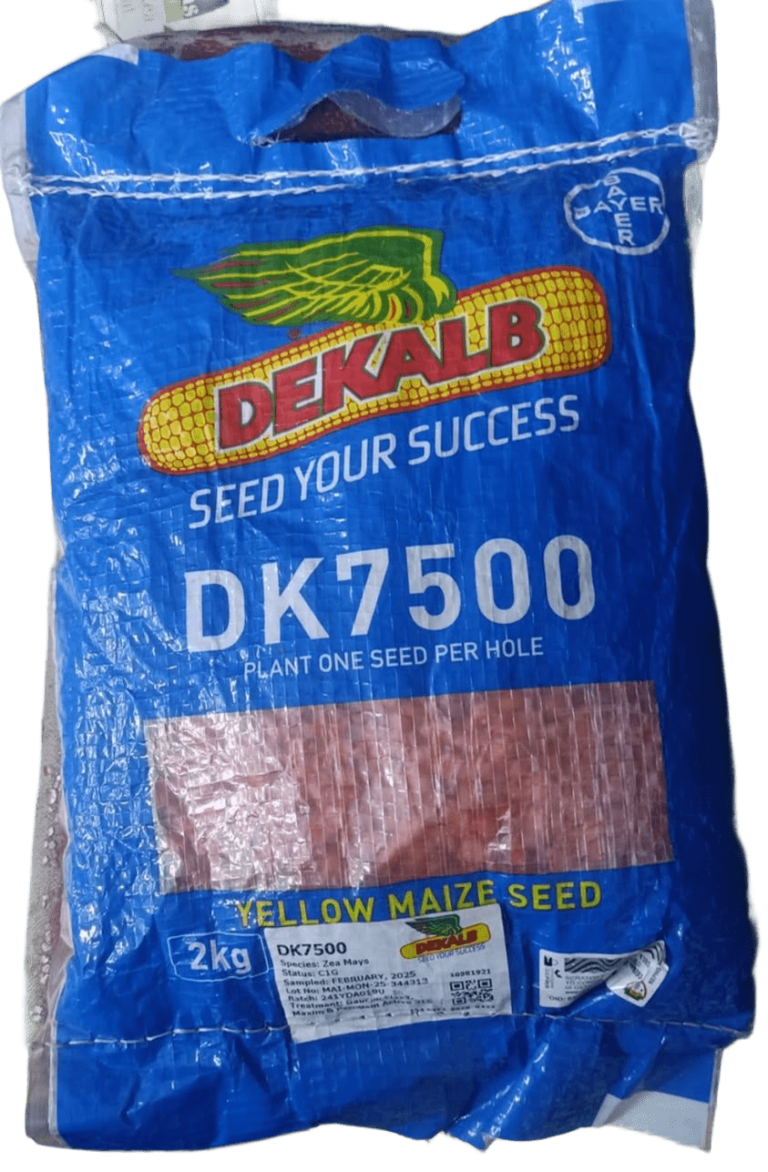


The cost of fertilizers has been on the rise since the rise of the Ukraine-Russia war. Most soil in Africa and Kenya specifically is depleted of key minerals necessary for crop growth.
Therefore planting crops with animal manure is not enough for optimal yields.
Research by Kenya Agricultural Livestock Research Organization KARLO has shown that crops grown with manure and fertilizers together give a high yield compared to those planted without. Read Also: Best maize varieties in Kenya
The government offered subsidized N.P.K fertilizer to maize farmers which is cheap instead of the normal DAP. The main reason is that soils in the food-rich rift valley are acidic.
However, farmers have raised concerns that the subsidized N.P.K fertilizer might not give a good yield compared to the normal D.A.P fertilizers.
What is the difference?
Both NPK and DAP contain nitrogen and phosphorus which are key for crop growth. Nitrogen helps in foliar growth while phosphorus helps in root development and growth. The big difference in both is the amount of phosphorus.
The quantity of phosphorus in both is of indicated as a percentage. For instance, the available DAP (Di-ammonium phosphate) fertilizer (18.46.0) contains 18% Nitrogen and 46% P2O5. It doesn’t indicate actual percentage of phosphorus but that of phosphate.
The phosphate consists of 56.4% oxygen and 43.6% phosphorus in terms of weight. This means the actual phosphorus percentage is 0.436*46= 20%

In NPK fertilizers, N stands for Nitrogen, Phosphorus and K-Potassium. NPK 23.23.0 is the used variety for planting. Nitrogen is 23%, phosphate 23% P2O5. And 0% potassium. Actual phosphorus is 0.436*23=10%
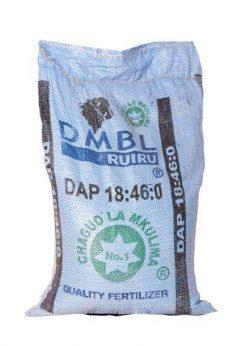
Therefore, a bag of 50kg DAP contains 10kg of Phosphorus while that of NPK 23.23.0 contains half of that of DAP; 5 kg.
What Next?
This means that farmers will need more of the subsidized NPK fertilizers for high yield. Unfortunately, few will afford and applying the normal rate of 100kg per acre will only give low yields.
Lime can be applied before planting to neutrality acidity when applying DAP fertilizers.

If planting is already done, topdressing will be required when the crops are 21-28days old. Failure to Top-dress will lead to purple discolouration and slow growth rate and later low yields. Normal topdressing with CAN fertilizers should be done too.
The government should provide lime to farmers early when preparing land together with plant fertilizers.